ILOILO CITY — Limited access to capital remains the biggest obstacle to startup development in Western Visayas, with businesses struggling to move beyond the idea stage, according to a regional ecosystem mapping report released by the Unified Movement in Western Visayas to Accelerate Startup and Spinoff Development (UMWAD).
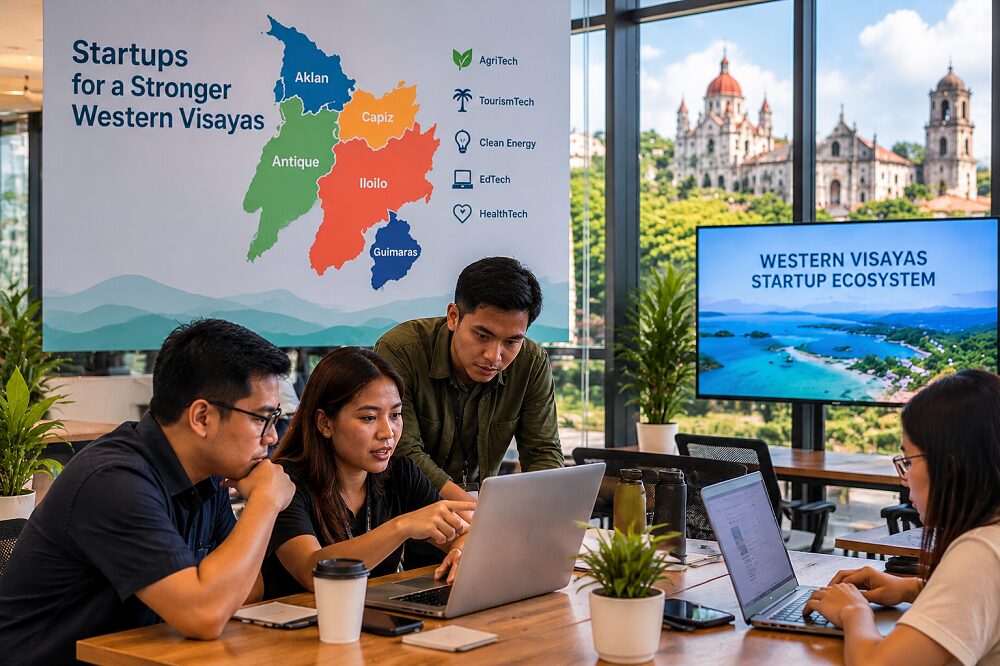
The 2025 Western Visayas Startup Ecosystem Mapping Report, developed in partnership with the Wadhwani Foundation and TechNest TBI, assessed the startup environment in Aklan, Antique, Capiz, Guimaras, and Iloilo.
The report found that while all five provinces have active founders at the idea stage, startup activity drops significantly during the launch and growth phases.
Iloilo emerged as the region’s main startup hub, with relatively established conditions in founder density, entrepreneurial culture, talent, and regulatory support. However, startups seeking to scale still depend heavily on resources and networks based in Metro Manila.
Capiz has a developing startup community supported by local incubators, while Aklan, Antique, and Guimaras remain at the nascent stage.
These provinces have trainable talent and active government and institutional networks but lack angel investors, growth funds, and support infrastructure outside academic institutions.
The report identified access to capital as the weakest component across the region, citing limited angel investment and venture capital, particularly outside major urban centers.
Regional strategy
To address the gaps, UMWAD proposed a hub-and-spoke model that would position Iloilo as the region’s central startup development hub while allowing other provinces to build their own capabilities and focus on local industries.
The proposed strategy includes establishing provincial angel investment networks linked to business organizations such as the Philippine Chamber of Commerce and Industry (PCCI) Iloilo, ILED Foundation, and Iloilo Business Club.
It also calls for expanding technology business incubators (TBIs) through Aklan State University, Guimaras State University, and institutions in Antique, while making incubation services available to founders outside academic communities.
Other recommendations include holding monthly startup meetups in each province, appointing local startup champions, and creating a centralized Startup WV portal for startup directories, events, funding opportunities, and talent matching.
The report also urged local government units (LGUs) and private companies to become early customers of regional startups through startup ordinances, local incentives, and procurement initiatives.
Aklan targets tourism technology
The report also outlined specific measures for Aklan, which it classified as a nascent ecosystem with foundational strengths.
Aklan has two active TBIs at Aklan State University and youth development programs, including the Philippine Youth Ambassadors Association (PYAA) and the Young Farmers Challenge. However, the province continues to face talent migration and limited access to growth capital.
Among the proposed initiatives is a tourism technology challenge in Boracay that would connect startups with resorts, hotels, and tour operators to develop solutions to industry problems.
The initiative would involve the Aklan Trade and Tourism Investment Promotions Center and ASU’s technology business incubators.
The report also recommended establishing Aklan’s first angel investor circle and holding regular startup pitching events with the participation of PCCI Aklan, UMWAD, and FyrLab.
Other proposals include providing founders with legal, accounting, and intellectual property assistance outside university settings, developing campus-to-startup internship programs, and building a mentor network among Aklanons living outside the province.
It also called for the provincial government and the LGU of Kalibo to develop local startup ordinances based on existing local incentives policies.
Call for private sector, government support
UMWAD urged universities and incubators to open their acceleration programs to founders who are not students and help commercialize research into viable startup ventures.
It also called on LGUs and national government agencies to adopt startup ordinances, designate startup champions, and consider local startups as suppliers of technology and services.
Business groups and investors were encouraged to organize angel investment networks, participate in demo days, and present industry problems that startups could address.
The report further called on regional stakeholders to promote local founders and their ventures to strengthen awareness of the startup ecosystem across Western Visayas.