Asean economic ministers signed a regional digital economy agreement in Manila on Nov. 14 aimed at easing cross-border online trade, as Department of Finance (DOF) secretary Frederick D. Go called for responsible artificial intelligence (AI) adoption to support jobs and business growth.
The 11 Asean member economies signed the Digital Economy Framework Agreement (DEFA) during the 28th Asean Economic Community Council Meeting.
The pact establishes a legally binding regional framework covering e-commerce, digital payments, data flows, cybersecurity, and digital trade.
For Philippine micro, small, and medium enterprises (MSMEs), the agreement could reduce barriers to selling goods and services across Southeast Asia.
Online sellers, freelancers, and digital service providers could gain easier access to regional customers, while consumers could benefit from more seamless and secure transactions.
DEFA is expected to enter into force in early 2027, subject to the completion of the required processes. Its implementation will determine how the regional commitments translate into benefits for businesses and consumers.
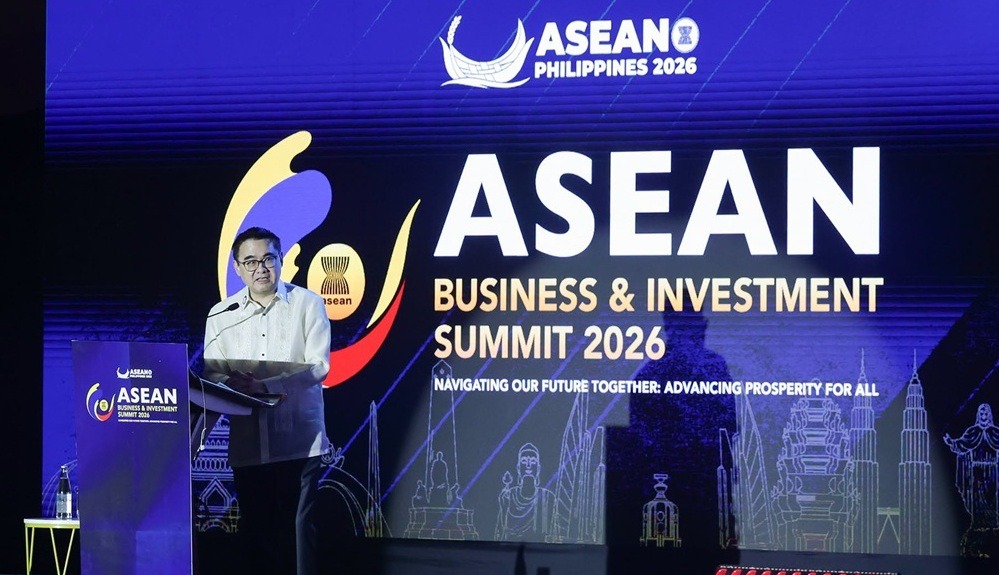
Speaking at the Asean Business and Investment Summit 2026, Go said digital integration should be accompanied by safeguards governing AI use.
“Our stated ambition is to harness responsible AI to carry the region into a digitally empowered community. Responsible AI is fair, helpful, transparent, and always has a human accountable for it,” he said.
Go identified reliable and clean power for AI infrastructure, predictable policies to attract long-term investments, and fiscal discipline to sustain investor confidence as priorities.
DEFA is among the Philippines’ 19 Priority Economic Deliverables under its 2026 Asean chairship. Another is the Asean Semiconductor Roadmap, which provides a strategic framework for strengthening regional semiconductor supply chains.
For the Philippines, the roadmap could support efforts to expand beyond semiconductor assembly, testing, and packaging into integrated circuit design, advanced packaging, and high-performance computing.
Go noted that electronics accounted for 70% of Philippine exports in September. He also identified the Luzon Economic Corridor as a prospective gateway for AI investment, linking advanced manufacturing with efforts to build resilient supply chains.
Go said the gains from AI should include more productive jobs for the country’s 1.9 million information technology and business process management workers, stronger businesses for 1.2 million MSMEs, and a wider tax base.
The Philippines’ chairship priorities include AI adoption, skills development, and broader use of the technology among smaller businesses.
Go also called for stronger capabilities to protect critical infrastructure and trusted-access arrangements sought by industry.