The Department of Science and Technology (DOST) is stepping up efforts to strengthen the country’s research capabilities in materials science, deploying a returning Filipino expert to help address gaps in thin film development critical to the semiconductor industry.
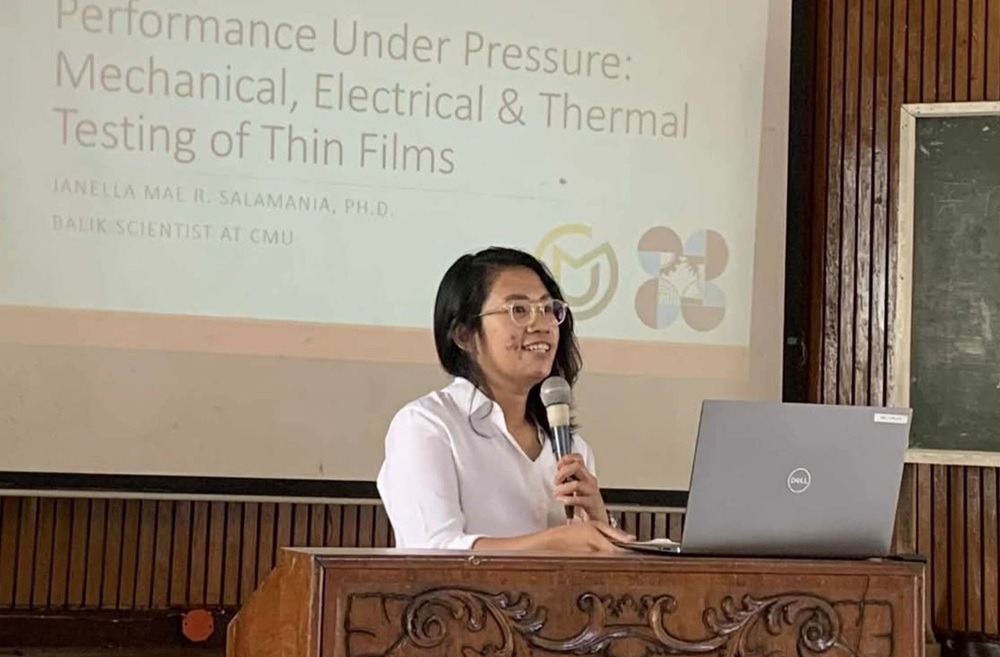
DOST “Balik Scientist” Janella Mae R. Salamania has been working to enhance local research and development (R&D) capacity in thin films, a key component in electronics manufacturing.
The sector is a major driver of Philippine exports, with the Semiconductor and Electronics Industries in the Philippines Foundation Inc. reporting that semiconductors accounted for 60.52% of the country’s electronic exports in 2025.
Despite strong demand, local production and R&D for high-quality and cost-efficient thin films remain limited, highlighting the need for deeper technical capability and infrastructure.
“By bringing home globally trained Filipino scientists, we accelerate technology development, strengthen regional research ecosystems, and ensure that innovation directly benefits Filipino communities and industries,” said DOST secretary Renato U. Solidum Jr.
Salamania said while research activity in materials science and thin films is growing in the Philippines, it is still at an early stage compared to major global research hubs.
During her month-long engagement under the Balik Scientist Program, she conducted training sessions and introduced advanced concepts in thin film science to students and researchers at Central Mindanao University, her host institution.
She also initiated collaborations with Linköping University and opened discussions with Uppsala University, both based in Sweden, expanding the university’s international research linkages.
DOST officials said the engagement reflects broader efforts to strengthen regional research ecosystems and build expertise outside major urban centers.
“The engagement of Dr. Salamania reflects the sustained growth of the BSP in reaching regional universities and empowering them with specialized expertise,” said Dr. Buendia.
“We are seeing stronger research outputs, enhanced laboratory capabilities, and more confident young researchers because of these engagements.”
For its part, the Philippine Council for Industry Energy and Emerging Technology Research and Development said Balik Scientists play a key role in strengthening the country’s Industry, Energy, and Emerging Technology (IEET) sector.
“Our Balik Scientists are catalysts for institutional transformation. In the IEET sector, their contributions go beyond research outputs — they build systems, mentor future innovators, and establish global linkages that elevate our competitiveness,” said Niñaliza H. Escorial, deputy executive director and officer-in-charge of the Office of the Executive Director of DOST-PCIEERD.
As of latest data, the Balik Scientist Program has supported 709 returning Filipino scientists across 956 engagements, forming part of the government’s push to build a stronger innovation ecosystem aligned with industrial growth.