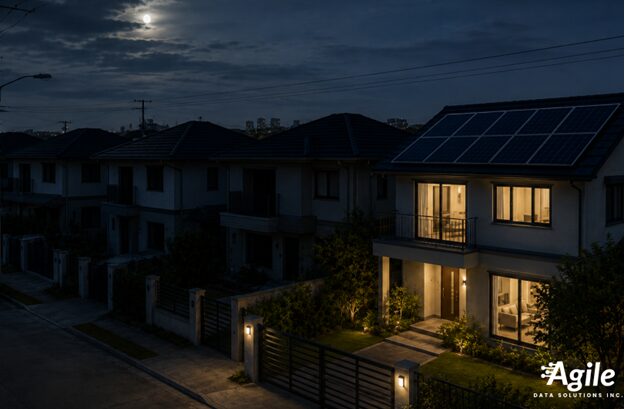
A nationwide survey conducted before the May power interruptions in Luzon and the Visayas found that a large majority of Filipinos were already considering shifting to solar energy, citing high electricity costs and unreliable power supply.
The study by Agile Data Solutions, conducted on April 23 among 3,000 respondents nationwide, found that 87% of Filipinos either agree or strongly agree that they are considering installing solar panels.
The survey was completed before the recent red and yellow alerts that triggered rotating brownouts in several areas, suggesting that interest in solar energy had already been growing even before the latest grid problems.
The study found that 57% of respondents consider themselves “very familiar” with solar energy, while another 32% said they are familiar with the technology. Only 3% said they were unfamiliar with solar power.
Social media platforms such as Facebook, TikTok, and Instagram emerged as the top source of information on solar energy at 37%, followed by solar companies at 11%. Government campaigns and community programs accounted for only 2% each.
Nearly eight in 10 respondents said rising electricity costs influenced their interest in solar energy, while many also cited recurring power outages as a factor behind considering alternative energy sources.
The study also found that 49% of respondents experience power interruptions “sometimes,” while 18% said outages occur “always.” Only 9% said they never experience brownouts.
Among respondents already using solar energy, the most common applications were solar lighting systems, cited by 51.6% of users, followed by full solar panel systems for electricity generation at 24%.
The survey identified cost and durability concerns as key barriers to wider adoption. Respondents cited fears over damage from typhoons and storms, as well as the upfront cost of installation and battery storage.
When asked about future adoption, 46% of respondents said they were “very likely” to adopt solar energy within the next one to five years, while 36.85% said they were “likely” to do so.
“The data suggests that Filipinos are no longer looking at solar only as a sustainability choice. They are looking at it as a practical response to high bills, outages, and uncertainty,” said Jason Gaguan, chairman and co-founder of Agile Data Solutions. “The interest is already there. The next challenge is making adoption more accessible, affordable, and trusted.”
The study also found broad support for government investment in renewable energy, with about nine in 10 respondents saying the government should increase spending in the sector.