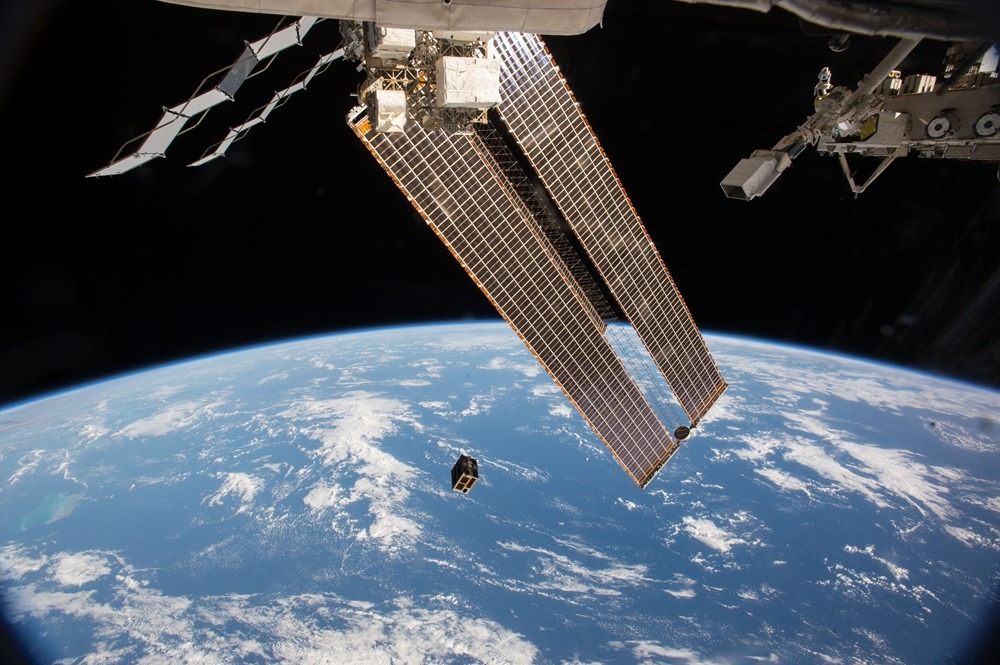
The Philippines marked on April 27 a decade since the deployment of Diwata-1, the country’s first locally built satellite, with officials pointing to expanded use of space-based data in disaster response and environmental monitoring.
Diwata-1 was released into orbit from the International Space Station in 2016, following efforts that began after Super Typhoon Yolanda exposed gaps in access to satellite imagery needed for damage assessment and response planning.
“The historical significance of Diwata-1’s ISS release is that we became a spacefaring nation. The Philippines established a presence in space through a satellite built and operated by Filipinos,” said Gay Jane P. Perez, project scientist of Diwata-1 and now ad interim director general of the Philippine Space Agency (PhilSA).
She added: “Naramdaman natin, tayong mga Pilipino, na kaya pala nating marating ang space,” referring to how the project helped break the perception that space development is limited to wealthier nations.
Government officials said the Diwata-1 program helped train Filipino engineers in satellite development and operations, including data processing for mapping and analysis. The initiative was followed by Diwata-2 and the Maya CubeSat program, which aimed to further build local expertise.
The establishment of PhilSA in 2019 institutionalized these efforts, with the agency now overseeing the national space program and working on partnerships and local industry participation in satellite component production.
Satellite-derived data have since been used in various incidents, including monitoring fires, earthquakes, floods, and oil spills, with outputs provided to the National Disaster Risk Reduction and Management Council and local governments, according to the agency.
PhilSA said it continues to combine locally developed capabilities with international partnerships and commercial satellite data subscriptions to meet national requirements.
Looking ahead, the agency is preparing for the planned launch of the Multispectral Unit for Land Assessment (MULA) satellite by early 2027, which is expected to improve monitoring of land and environmental resources.
Officials said the anniversary underscores a shift from reliance on foreign data toward building domestic capacity in space science and technology, driven initially by disaster response needs but now expanding to broader applications.