
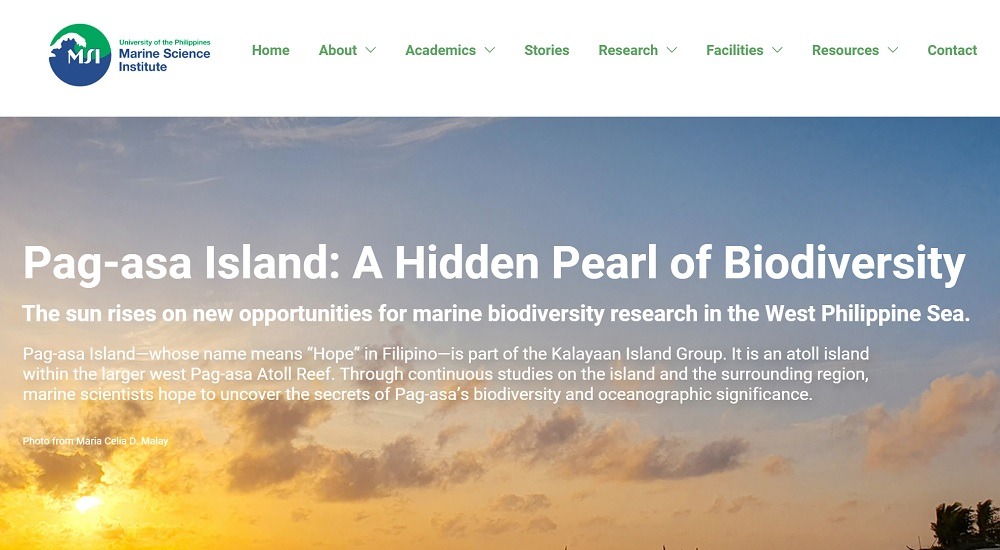
The University of the Philippines (UP) Marine Science Institute has launched a new webpage highlighting marine biodiversity and scientific research in Pag-asa Island and the wider West Philippine Sea, coinciding with the International Day of Biological Diversity and the country’s Month of the Ocean observance.
Called “Pag-asa Island: A Hidden Pearl of Biodiversity,” the webpage features underwater photographs, laboratory images, and descriptions of marine species documented during expeditions to the Kalayaan Island Group.
It also includes a timeline of the institute’s expeditions to the West Philippine Sea dating back to 1993.
According to the institute, the webpage showcases the diversity of marine life found in Pag-asa Island, including “colorful crabs to life-saving seaweeds,” while also providing insights into the scientific work being conducted in the area.
The project also includes “Letters to Pag-asa,” a blog series containing reflections from researchers and faculty members about their experiences conducting fieldwork and engaging with the local community on the island.
“These are common experiences when one does fieldwork in remote parts of the country, whether in islands or in mountains,” wrote Dr. Gizelle Batomalaque in one of the blog posts titled “Still in the Philippines, Still at Home.”
“The residents of Pag-asa Island show the natural tendency of humans to self-organize and make the most out of their situation.”
The UP Marine Science Institute said the initiative aims to help bring the Filipino public closer to the realities of scientific research in the West Philippine Sea. Future research updates will also be added to the webpage as studies continue.
The institute said its current research efforts on Pag-asa Island are supported by the Canada Fund for Local Initiatives through the Embassy of Canada in the Philippines and the Marine Environment and Resources Foundation Inc.


