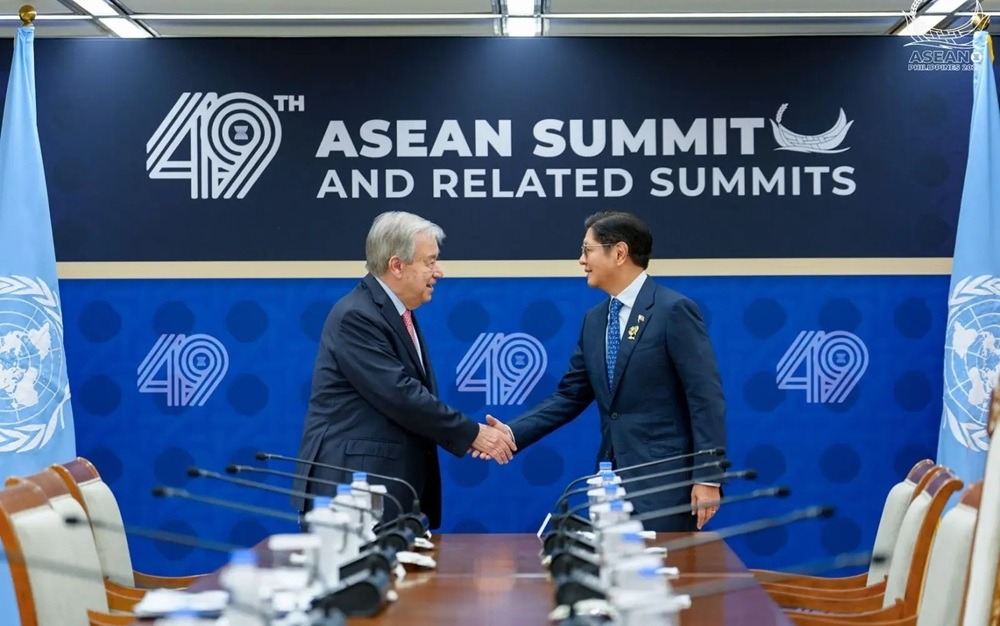
United Nations secretary-general António Guterres urged Southeast Asian countries to develop artificial intelligence (AI) responsibly and close the digital divide, calling for stronger international cooperation to spread the technology’s economic benefits.
Speaking at the 16th Asean-United Nations Summit in Manila on Nov. 16, Guterres identified AI governance and digital inclusion as priorities as emerging technologies reshape economies and employment.
He said developing countries must have a stronger voice in global decision-making, including in setting rules and building institutions to govern emerging technologies.
For the Philippines, which is expanding its use of AI and digital services, these priorities include improving digital infrastructure, developing AI-related skills, and preparing workers for changes in the labor market. Wider digital access could also help micro, small, and medium enterprises participate in the digital economy.
Asean adopts migrant recruitment safeguards
Digital platforms also figured in a Philippine-led declaration adopted by Asean leaders seeking stronger safeguards against fraudulent recruitment, including online job offers that lure workers into trafficking and cyber-scam operations.
The Asean Declaration on Fair, Ethical and Sustainable Recruitment for Empowered Migrant Workers was adopted on Nov. 15 during the 49th Asean Summit.
It commits member states to strengthen recruitment oversight, curb excessive and unreasonable recruitment fees, improve access to justice, and expand regional cooperation to protect migrant workers.
Department of Migrant Workers (DMW) secretary Hans Leo Cacdac said the declaration could benefit around 600,000 Filipino migrant workers across Asean member states by strengthening safeguards throughout recruitment and employment.
Cacdac said it also addresses emerging labor migration challenges, particularly online recruitment schemes that expose workers to exploitation.
Criminal networks have used social media and other digital platforms to advertise fraudulent jobs, including offers that lead to human trafficking and forced participation in cyber-scam operations.
The risks of digital recruitment were among the issues discussed at the 19th Asean Forum on Migrant Labor in October. Government, employer, and worker representatives, along with other participants, agreed on 30 recommendations for regional action.
According to the International Labor Organization (ILO), the recommendations call on member states to strengthen oversight of online recruitment and clarify the responsibilities of recruitment agencies, digital platforms, and social media companies.
They also propose guidelines on the use of AI in recruitment.
Recommended measures include stronger verification of employers and recruiters, validation of online job advertisements, secure government-facilitated recruitment portals, and updated registers of licensed recruitment agencies.
Participants also called for mechanisms to verify employers, job orders, and employment offers across countries of origin and destination.
Digital literacy programs were another priority, aimed at helping migrant workers, their families, and employers recognize phishing, impersonation, and AI-generated deceptive job advertisements.
The ILO said online platforms can expand access to cross-border employment but also expose workers and legitimate businesses to fraudulent advertisements, deceptive offers, impersonation, and illegal recruitment.
During the forum, the DMW reported that the Philippines had helped take down approximately 250,000 online posts linked to fraudulent overseas job offers through partnerships with Meta and TikTok Philippines.
DMW undersecretary Darlene Pajarito presented the initiative during discussions on online recruitment, citing the need for closer cooperation among governments, social media platforms, and other stakeholders.
Cases involving Filipinos recruited into scam operations illustrate these risks. In February 2026, the DMW reported the repatriation of 190 overseas Filipino workers rescued from scam hubs in Cambodia.
Most had reportedly accepted fraudulent online offers promising high-paying jobs but ended up in exploitative working conditions.
DMW Assistant Secretary Levinson Alcantara said the declaration does not impose penalties or sanctions on member states that fail to address unethical recruitment. Instead, it focuses on capacity-building, stronger institutions, and regional cooperation.