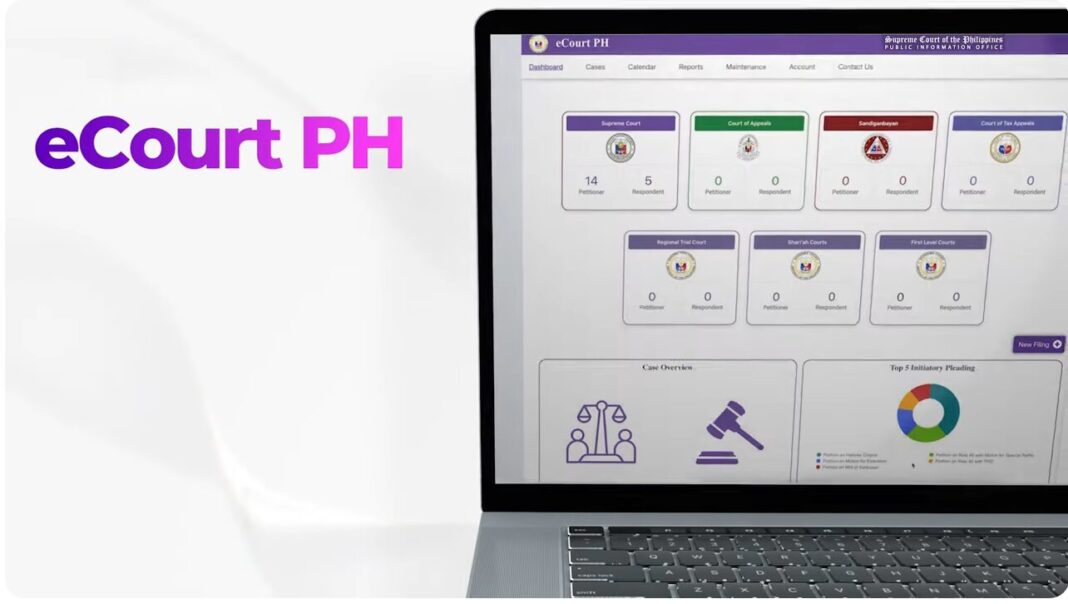
Starting July 1, 2025, the Supreme Court (SC) will begin transitioning to electronic filing (eFiling) for certain petitions and motions through the eCourt PH app, which is available on the Philippine Judiciary Platform (PJP), a unified online portal for court services.
The move is based on the Guidelines on Transition to Electronic Filing in the Supreme Court, approved by the SC en banc on May 20, 2025, in preparation for mandatory eFiling starting October 1, 2025.
From July 1 to September 30, 2025, lawyers must file digitally with the SC through the PJP – in addition to paper-based filing (personal, registered mail, or courier) – initiatory pleadings and motions for extension of time in the following cases:
- Petitions for review on certiorari under Rule 45 of the Rules of Civil Procedure, with or without applications for temporary restraining orders (TRO), writs of preliminary injunction (WPI), or other provisional remedies;
- Review of judgments and final orders or resolutions of the Commission on Elections and the Commission on Audit under Rule 64 of the Rules of Civil Procedure;
- Petitions for certiorari, prohibition, or mandamus under Rule 65 of the Rules of Civil Procedure, with or without applications for TROs, WPIs, or other provisional remedies;
- Petitions for contempt;
- Petitions for the issuance of prerogative writs, including habeas corpus, amparo, habeas data, kalikasan, and continuing mandamus; and
- Quo warranto
However, service of these documents must still comply with the Rules of Civil Procedure.
Subsequent pleadings in earlier cases falling under this list that are due on July 1, 2025 onwards must also be digitally filed with the SC through the PJP.
By October 1, 2025, eFiling and service through the PJP will be mandatory for covered pleadings filed by lawyers.
Lawyers must register with the PJP and file electronically using their individual accounts. Documents filed through a registered account are considered filed by the account holder, regardless of who signed the document.
Use of another lawyer’s account is strictly prohibited and may result in disciplinary action.
The following are not covered by the eFiling requirement and must follow existing Rules:
- Criminal appeals under Rule 122 of the Rules of Criminal Procedure, from the first- and second-level courts, the Court of Appeals (CA), Court of Tax Appeals (CTA), and the Sandiganbayan;
- Administrative complaints against Supreme Court personnel and its decentralized units, and the Presidential Electoral Tribunal (PET);
- Administrative matters involving the CA, Sandiganbayan, CTA, and lower courts, their Justices, judges, and personnel;
- Complaints against lawyers and other Bar matters; and
- Cases within the jurisdiction of the PET, the Senate Electoral Tribunal, and the House of Representatives Electoral Tribunal, which shall continue to be governed by their respective rules of procedure.
Parties without lawyers, amicus curiae, Shari’ah counselors-at-law who are not members of the Philippine Bar, and law student practitioners must continue filing documents personally, by registered mail, or through an accredited courier.
Documents filed and served before July 1, 2025, in accordance with the Rules of Court do not need to be re-filed or re-served under the Guidelines, unless ordered by the SC. The original date and time of filing and service will be recognized.
During the transition period, the SC may allow corrections to erroneous filings upon its directive. However, starting October 1, 2025, improperly filed petitions, pleadings, or motions may be dismissed or denied. Any subsequent improper filings will be treated as not filed.