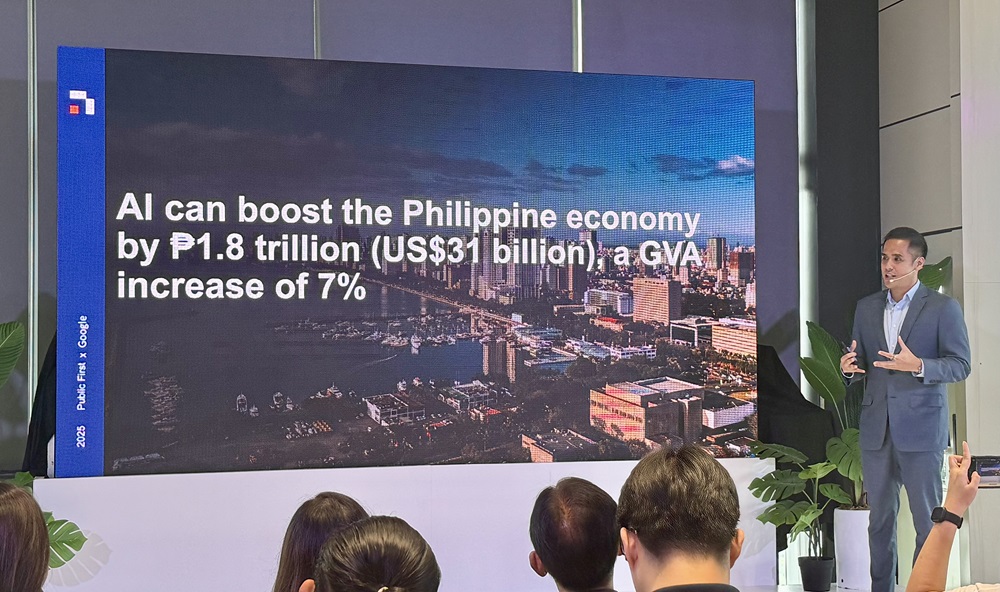
The Philippines could see an economic boost of up to P1.8 trillion (about $31 billion) from the adoption of artificial intelligence (AI), according to a report by London-based public policy research agency Public First. The figure represents an estimated 7% increase in gross value added.
The report, Turbocharging Growth: The Philippines’ AI Opportunity, released on Tuesday, Aug. 12, outlines how AI could contribute to sustaining the country’s economic performance.
It estimates that 37% of the workforce could benefit from productivity gains, with potential time savings of up to three hours a week on administrative tasks. This could lead to wage increases of about 6% and annual productivity gains of roughly P110,000 per worker.
The study identifies key sectors where AI could have a substantial impact. Wholesale and Retail could gain P410 billion (9% GVA increase), Finance and Insurance P300 billion (12% GVA increase), and Public Administration and Defense P109 billion (9% GVA increase).
“AI is more than just a buzzword; it’s a powerful tool that can help every Filipino — from students to parents to business owners—thrive in a rapidly changing world,” said Gabby Roxas, country marketing manager of Google Philippines and Vietnam.
“This report gives us a clear picture of what’s possible, and it’s up to all of us to ensure we have the skills needed to seize this incredible opportunity.”
Beyond productivity, AI tools are projected to help address challenges in areas such as cybersecurity and agriculture. The report estimates that AI could reduce cybersecurity-related costs by P180 billion and improve agricultural productivity by P120 billion by 2035 through methods like precision farming and early pest detection.
Survey data in the report indicate that about half of Filipinos use AI tools at least weekly, with 46% expressing optimism about the technology’s impact on the country and 50% about its personal impact.
The study also notes the potential for AI to generate new types of jobs, particularly in managing AI systems and performing higher-value work. It highlights the need for training, with 90% of surveyed workers expressing interest in learning how AI models function.
Google said it is working with government agencies, industry groups, and academic institutions to help build AI-related skills through programs such as Google Career Certificates, including its AI Essentials course.
Accenture, which is also collaborating with Google on AI skills training, is offering access to these courses to employees, their families, and supported communities.