
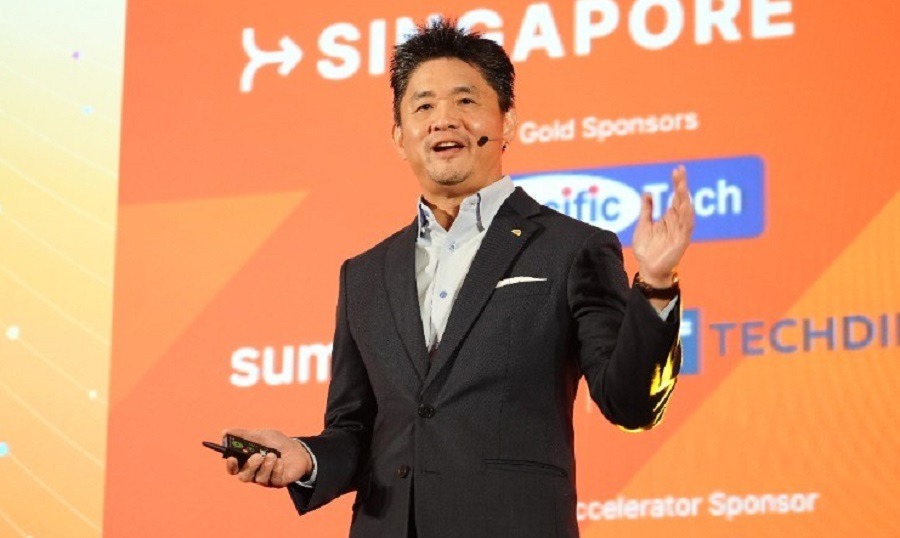
Enterprises across Southeast Asia are heading into a major technology reset in 2026, as artificial intelligence, edge computing, and new security models upend long-standing approaches to software, cloud, and industrial systems, according to Cloudflare Asean vice president Kenneth Lai.
In a year-end outlook, Lai said the coming year will mark the end of several legacy assumptions in enterprise technology — most notably the dominance of single-cloud strategies and traditional software-as-a-service (SaaS) licensing models.
“The traditional SaaS model — defined by static features and centralized data silos — is nearing its end,” Lai said. “Enterprises are now demanding AI-native, real-time, context-aware services that deliver intelligence, not just software.”
Lai said 2026 will see companies move away from mono-cloud strategies that were once favored for efficiency and cost savings.
Instead, boards and executives will prioritize resilience, availability, and risk management, especially as outages, cyber threats, and regulatory pressures expose the fragility of centralized architectures.
According to Lai, organizations will increasingly deploy domain-specific AI models closer to where data is generated, keeping sensitive information local while distributing intelligence across edge environments.
“The focus is shifting from application consumption to AI-as-a-Service,” he said. “Companies will pay for intelligence and outcomes, not for software seats.”
While SaaS platforms will remain part of enterprise IT stacks, Lai said their dominance will decline as AI agents become the primary interface for enterprise workflows.
Instead of paying monthly licenses for every employee, businesses will invest in AI systems that can analyze data, automate tasks, and deliver real-time insights. This shift, he said, will reshape how organizations measure value from technology investments.
“In 2026, enterprises will demand software that is smart, adaptive, and customized to their domain,” Lai said. “AI assistants will move to the forefront, driving productivity and decision-making across the organization.”
The move also reflects growing concerns around data privacy, latency, and sovereignty, particularly in regulated industries, pushing AI workloads closer to users and local infrastructure.
Beyond enterprise IT, Lai said 2026 will be a breakout year for Industrial AI, transforming how factories, utilities, and critical infrastructure operate.
Instead of merely monitoring systems for failures, AI models will actively optimize machines and processes in real time — shifting operational technology from reactive to autonomous.
“Industrial AI moves OT from watching operations to driving them,” Lai said.
However, this surge in automation creates new security challenges, particularly in environments filled with IoT devices and machines that cannot run traditional security software.
To address this, Lai pointed to the rapid adoption of agentless Zero Trust security, where the network itself verifies every machine interaction automatically and continuously.
“You can’t install agents on every robot or sensor,” he said. “Security has to be invisible, built into the network fabric, and capable of verifying every interaction instantly.”
Taken together, Lai said the three trends signal a decisive turning point for enterprises in 2026 — one where intelligence, resilience, and trust become core design principles rather than add-ons.
“The organizations that succeed will be those that redesign their architectures around distributed intelligence and continuous verification,” he said. “2026 is the year these shifts move from experimentation to the mainstream.”


