
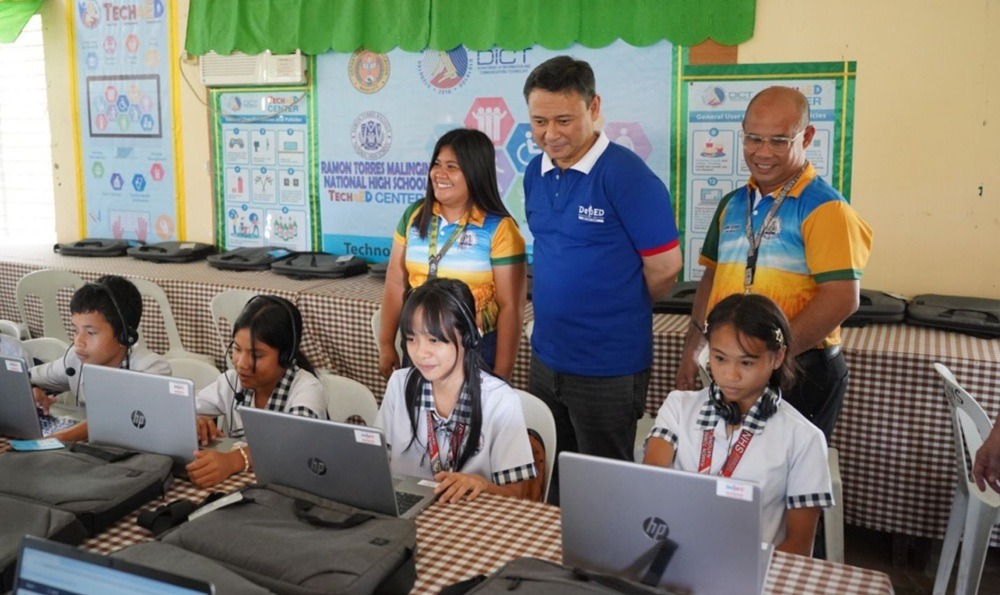
The Department of Education is stepping up regional collaboration with Southeast Asian counterparts to accelerate the adoption of artificial intelligence–driven digital infrastructure in basic education, framing technology as a practical tool to improve learning outcomes and reduce teachers’ administrative workload.
Education officials said the Philippines actively engaged education leaders, digital policymakers, and development partners during the 3rd Regional Policy Convening of the AI Ready Asean Program held Monday, Feb. 9, in Pasig City.
The country’s participation is anchored on Project AGAP.AI, DepEd’s flagship artificial intelligence initiative for education. Under the AI Ready Asean program, nearly 796,000 Filipinos — including teachers and learners — have completed training on basic AI literacy, according to DepEd.
Education secretary Sonny Angara said the Philippines views digital transformation as a shared regional effort rather than a competition among countries.
“The Philippines does not see the digital race as a solitary journey. We stand ready to walk alongside our Asean neighbors — sharing our insights, our resources, and our steadfast commitment,” Angara said. “Together, we can build a digitally empowered region where growth is shared and progress is collective.”
He added that AI policy must be grounded in real-world needs, noting that “a future-ready Asean cannot be built on guesswork or lofty rhetoric alone.”
The policy convening was organized under the AI Ready Asean initiative of the Asean Foundation, with support from Google.org. The regional program aims to expand AI literacy and promote responsible use of emerging technologies across all Asean member states.
For Filipino learners, DepEd said the regional collaboration is expected to lead to more accessible digital learning tools, improved online and blended learning platforms, and data-driven interventions that help schools identify learning gaps earlier.
Officials emphasized that these initiatives are designed to ensure ethical, inclusive, and age-appropriate use of AI in classrooms.
Teachers are also expected to benefit from shared Asean policy frameworks that focus on classroom-ready applications.
DepEd said AI-enabled systems are being positioned to streamline administrative tasks, enhance lesson planning through smarter digital resources, and provide timely insights on student progress — freeing up more time for direct teaching and learner engagement.
The Asean Foundation said it intends to align AI Ready Asean activities with the Philippines’ Asean chairmanship in 2026, particularly in advancing digitalization in education and extending AI benefits to diverse communities.
DepEd said it will continue working with regional partners to ensure that AI adoption in basic education strengthens — not replaces — the role of teachers, while equipping learners with digital skills needed in a rapidly evolving economy.


