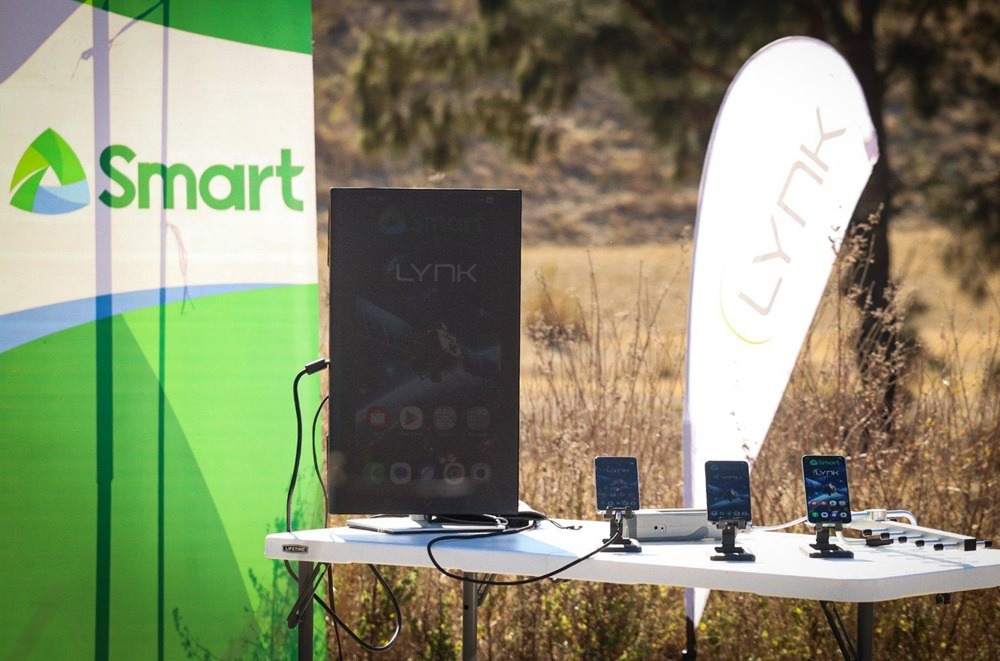
Smart Communications and US-based satellite firm Lynk Global have conducted another round of field tests for direct-to-device (D2D) satellite connectivity, this time in the northern towns of Burgos, Bangui, and Pagudpud in Ilocos Norte, areas that face the West Philippine Sea and have limited terrestrial mobile coverage.
According to the companies, testing teams were able to exchange text messages between ordinary smartphones in Ilocos Norte and Metro Manila using Lynk’s low-earth-orbit satellites.
They also accessed websites including Smart, the Department of Information and Communications Technology (DICT), and Philippine Atmospheric, Geophysical and Astronomical Services Administration (PAGASA).
The Ilocos trials follow earlier tests in Barangay Marambong in Pandan, Catanduanes, a remote coastal community facing the Pacific Ocean where network rollout remains challenging due to terrain and distance.
Representatives from the National Telecommunications Commission (NTC), including Region I director Glenn Mercado, observed the Ilocos tests onsite.
PLDT and Smart said satellite connectivity could help address coverage gaps in geographically isolated and disadvantaged areas (GIDAs), particularly during disasters when ground-based infrastructure may be down.
“Connecting the unconnected has always been at the heart of our mission,” said Menardo G. Jimenez, PLDT chief operating officer and network head.
“The Philippines is an archipelago, and it can be challenging to reach many of our communities, particularly in geographically isolated and disadvantaged areas (GIDAs), with traditional towers.”
He added: “Direct to device satellite technology gives PLDT and Smart a powerful way to overcome the geographic challenges of serving an archipelago.
“For us, this is no longer just about announcing partnerships, but about delivering real results for real communities. By testing where the technology truly matters, we are taking a step closer to providing reliable connectivity to every Filipino, no matter how remote their location.”
NTC’s Mercado noted that the technology still needs further refinement but acknowledged its potential role in extending connectivity.
“As with any emerging technology, there are areas that still need refinement. But given these early results, we are hopeful that as the solution matures, it can be part of measures to extend connectivity to remote and underserved communities,” he said.
Lynk CEO Ramu Potarazu said the Philippines’ geography makes it a suitable environment to test satellite-to-phone services for public use.
“These tests show that meaningful, lifesaving connectivity can be made available even in locations where traditional networks cannot reach,” he said.
Smart and Lynk said they plan to continue expanding D2D testing across different terrains and maritime routes while coordinating with regulators and local governments in preparation for possible deployment.