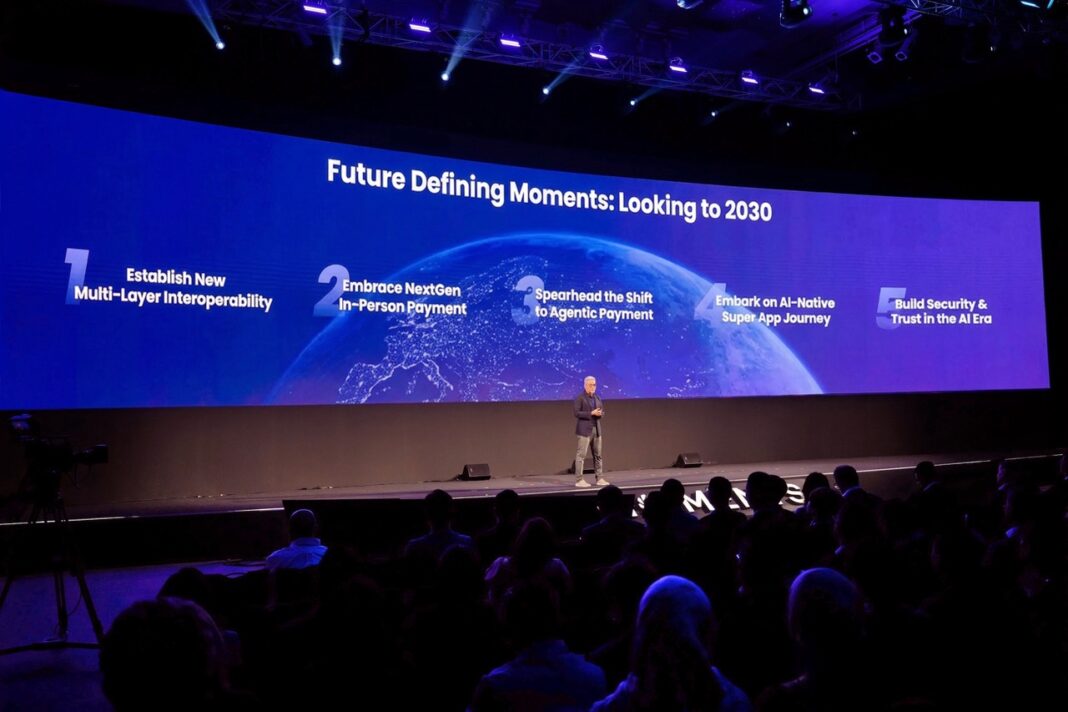
Ant International said it now connects more than 150 million merchants to over 2 billion user accounts worldwide, as the company outlined a strategy centered on artificial intelligence (AI) and financial interoperability during its MoMents 2026 fintech forum.
The firm said its global payments infrastructure supports more than 300 payment methods across over 220 markets, including national QR systems and digital wallets, and processes an average of more than 20 million transactions daily.
The expansion comes as Ant International deepens partnerships across Asia, Latin America, and the Middle East. These include cross-border QR payment initiatives in Vietnam, SME lending collaboration in Latin America, and planned rollout of Alipay+ QR payments in Saudi Arabia in 2026.
Ant International chief executive officer Peng Yang said the company is positioning its network and technology stack to support both large enterprises and small businesses engaged in cross-border commerce.
“New models of financial interoperability and AI commerce give us powerful tools to help global giants as well as mom-and-pop shops to increase resilience and expand revenue streams,” Yang said.
“A broader and deeper network means we can work with more partners on more levels to deliver more innovative, trusted, and high ROI fintech solutions in the world’s fastest growing markets.”
The company said it is integrating its core business units — including Alipay+, Antom, Bettr, and WorldFirst — to deliver payments, global accounts, and embedded financial services aimed at enterprises and small and medium-sized businesses.
Among the technologies introduced were AI-driven tools for payments, risk management, and foreign exchange forecasting. These include an AI-as-a-service platform for fintech partners, a risk detection system designed to identify high-risk transactions, and an AI model used internally to manage currency exposure.
Ant International also unveiled an open-source “agentic” payment protocol designed to enable AI-driven transactions across mobile platforms, as well as tools to automate merchant operations such as payment integration and dispute handling.