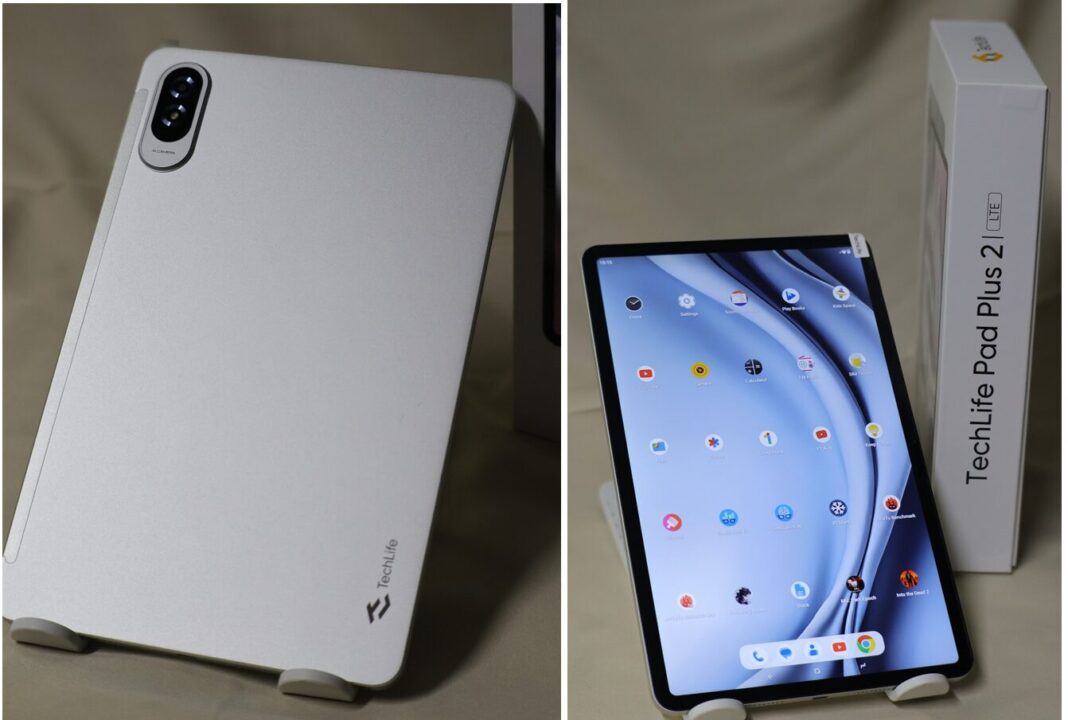
Consumer tech manufacturer TechLife has expanded its lineup with the release of the TechLife Pad Plus 2. True to its vision of creating affordable and user-friendly electronics, the tablet comes with a large display, a capable chipset, and long battery life at a budget-friendly price point.
Marketed as the “Big Screen, Big Idea” device, the Pad Plus 2 is designed for students, professionals, and casual users.
Newsbytes.PH had the opportunity to test the tablet and evaluate its performance.
Display and Design
The TechLife Pad Plus 2 features a 12-inch IPS TFT display with a 2000 x 1200 resolution, a 90Hz refresh rate, and up to 450 nits of brightness.
The screen delivers good color reproduction, making it suitable for light gaming, streaming, and web browsing. Its 5:3 aspect ratio provides additional vertical space for reading documents and multitasking with split-screen applications.
The tablet’s metal back panel adds a premium feel while improving durability compared to plastic alternatives. The build quality feels solid, and the design is clean and understated.
Audio is delivered through a quad-speaker setup with HiFi audio support. Whether watching videos, attending online classes, or listening to music, the speakers provide clear sound with good separation, making the device suitable for multimedia consumption.
Performance
The TechLife Pad Plus 2 is powered by a MediaTek Helio G100 processor paired with 4GB of RAM, expandable to 10GB through virtual RAM expansion.
With 128GB of internal storage, expandable via microSD, it is capable of handling everyday tasks. The chipset’s mid-range capabilities allow it to efficiently support online classes, video streaming, productivity apps, and social media browsing.
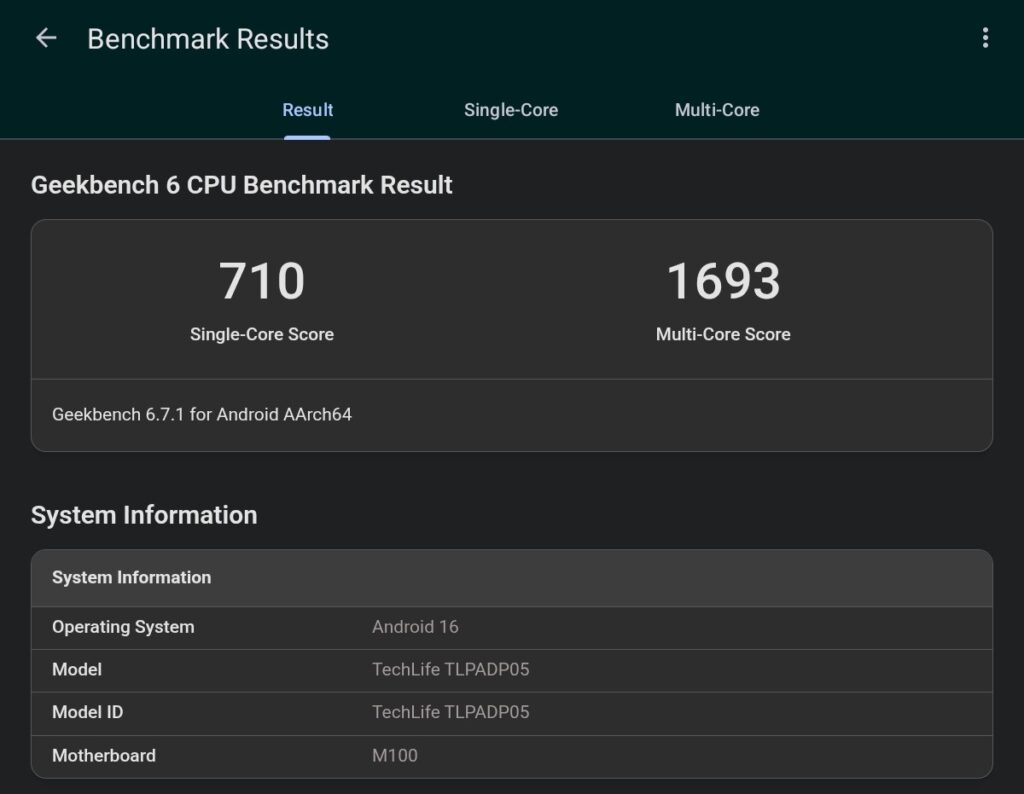
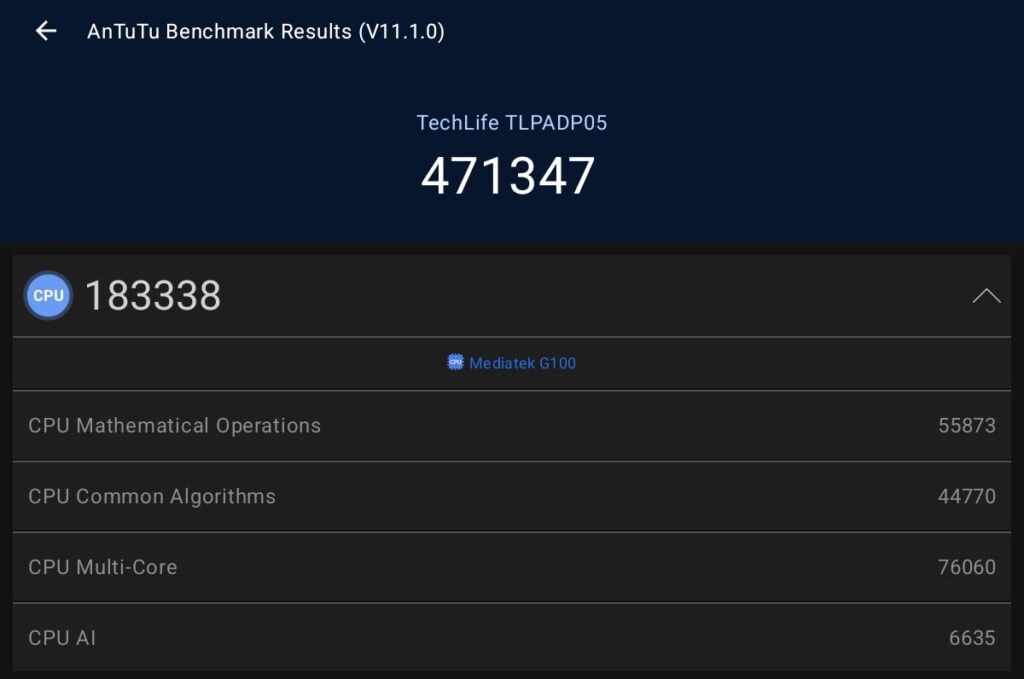
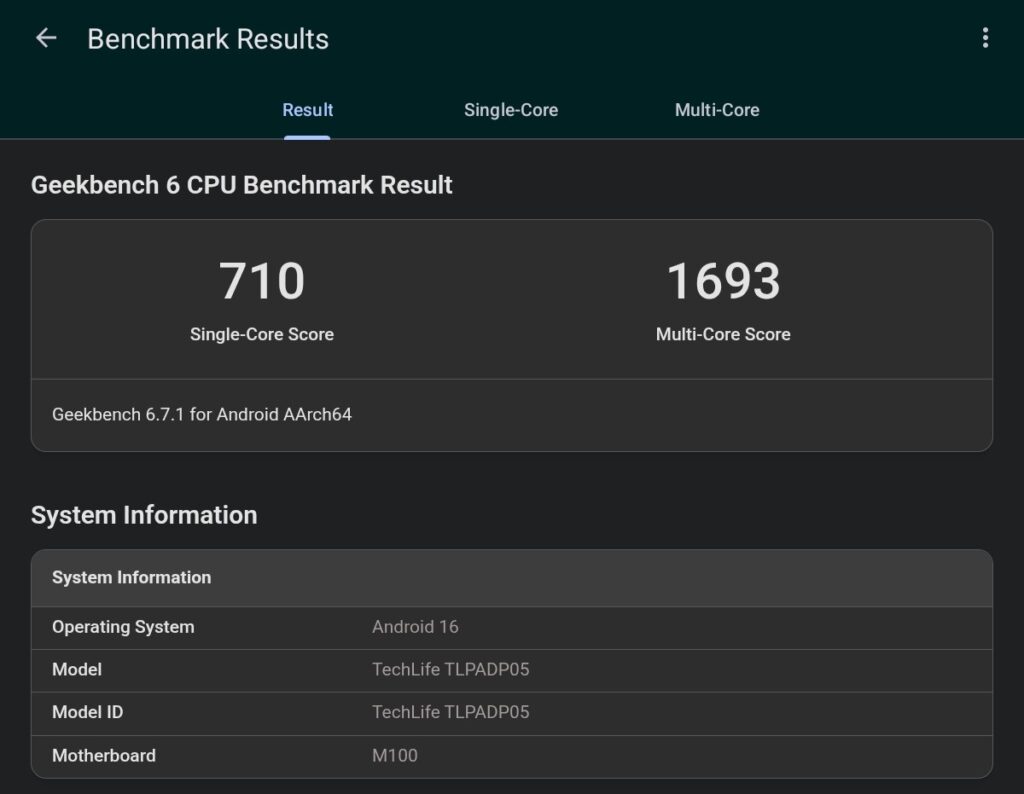
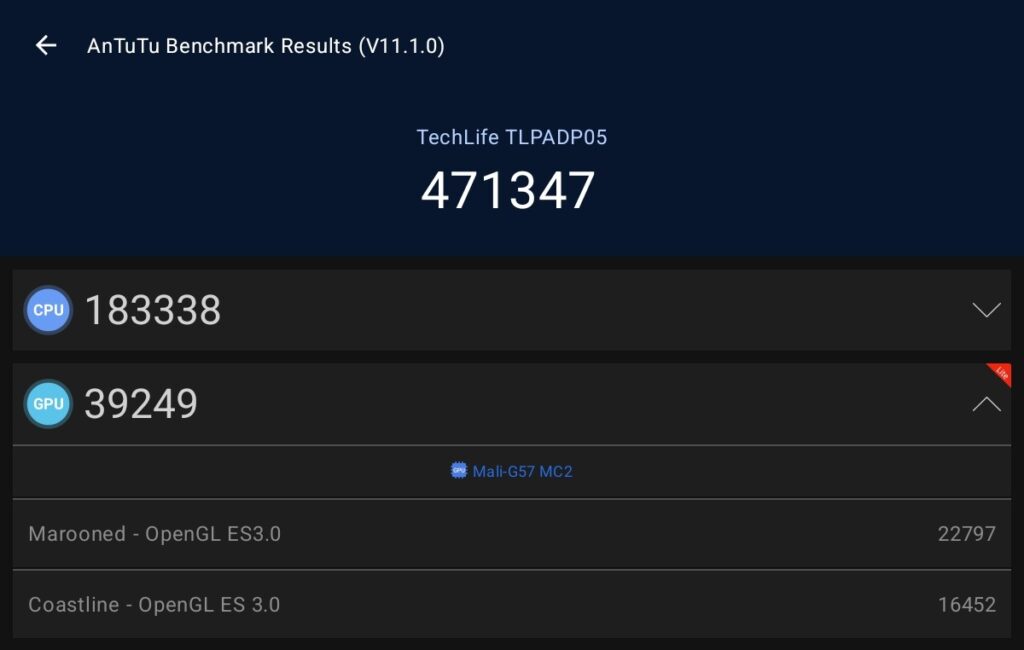
However, real-world usage revealed its limitations during heavier workloads, with occasional lag. Benchmark scores, including a Geekbench 6 single-core score of 710 and multi-core score of 1,693, as well as a CPU score of 183,338 on AnTuTu Benchmark, indicate that while performance is adequate for day-to-day activities, it is not designed for demanding applications.
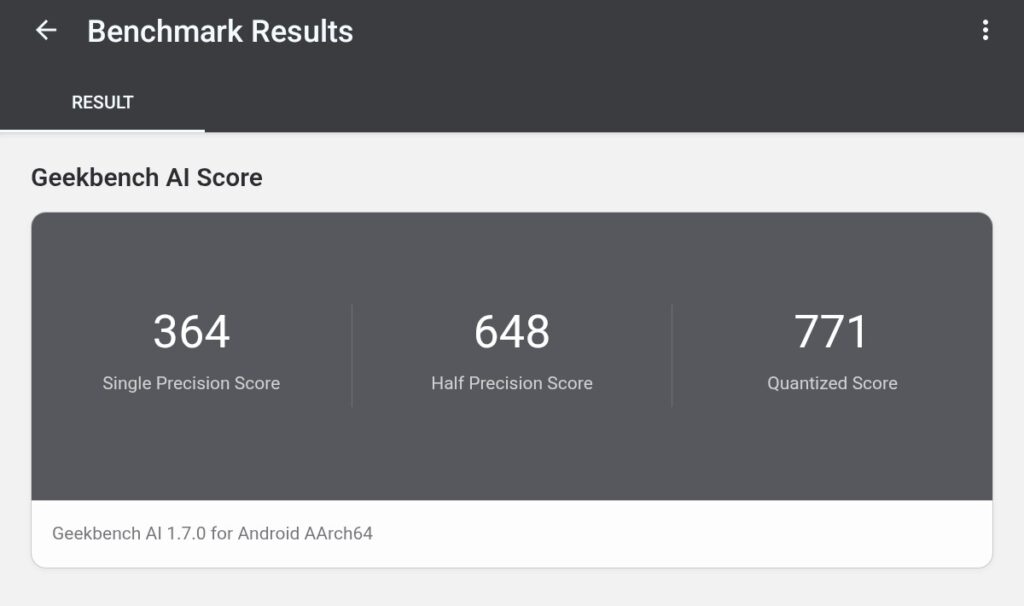
The tablet also struggles with AI-intensive applications, achieving a Geekbench AI quantized score of 771, indicating limited capability in handling advanced AI workloads.
In addition, the chipset is limited to LTE connectivity, which may reduce its appeal as more markets transition to 5G networks.
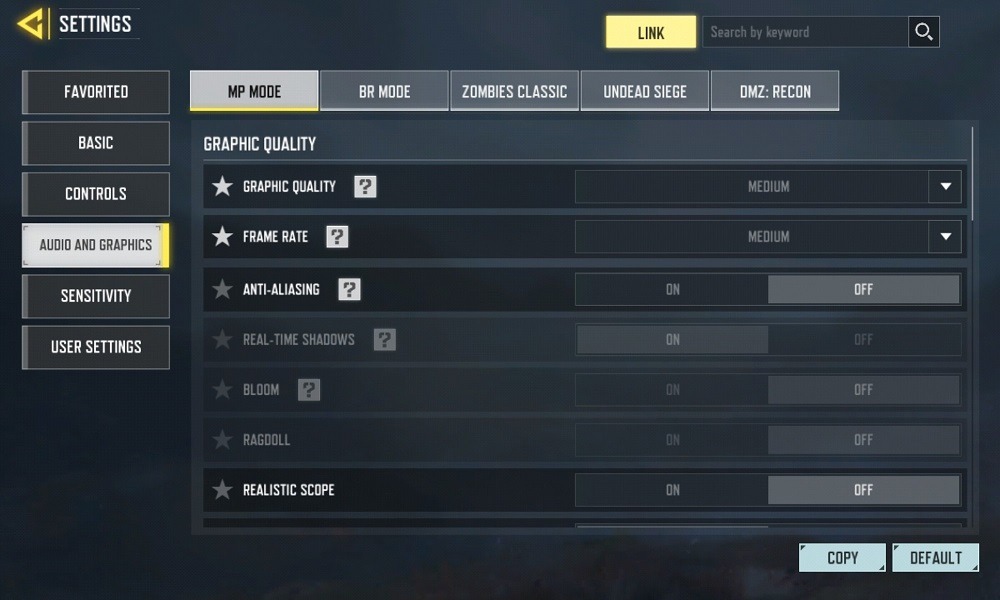
When it comes to gaming, the integrated Mali-G57 MP2 GPU recorded a Geekbench 6 score of 1,506 and an AnTuTu GPU score of 39,249. It handled titles such as “Call of Duty: Mobile” smoothly, although graphics settings were limited to medium quality.

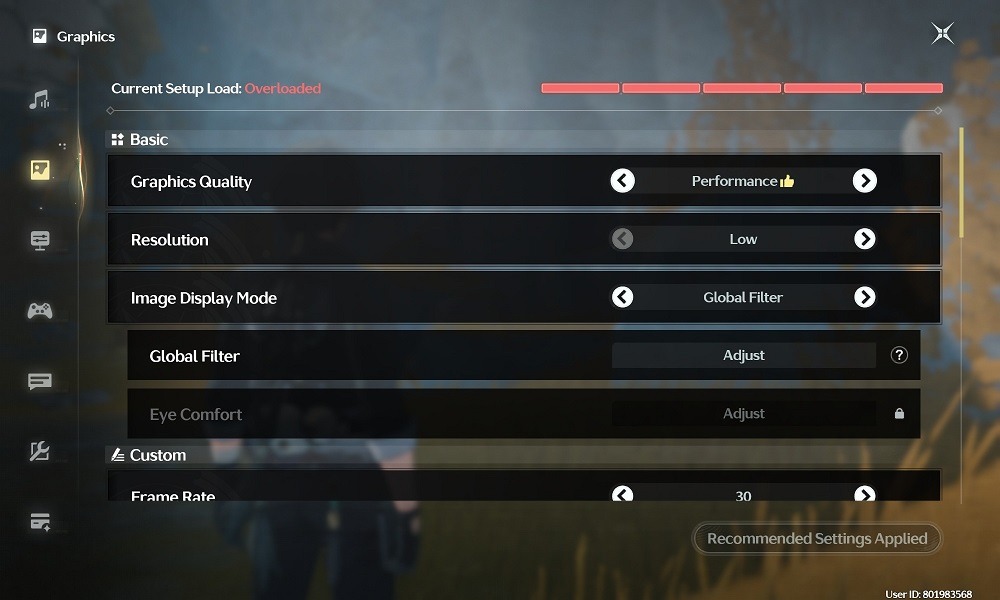

More demanding games, such as “Wuthering Waves”, proved challenging and occasionally resulted in crashes when running simultaneous applications such as screen recording.
Battery Life
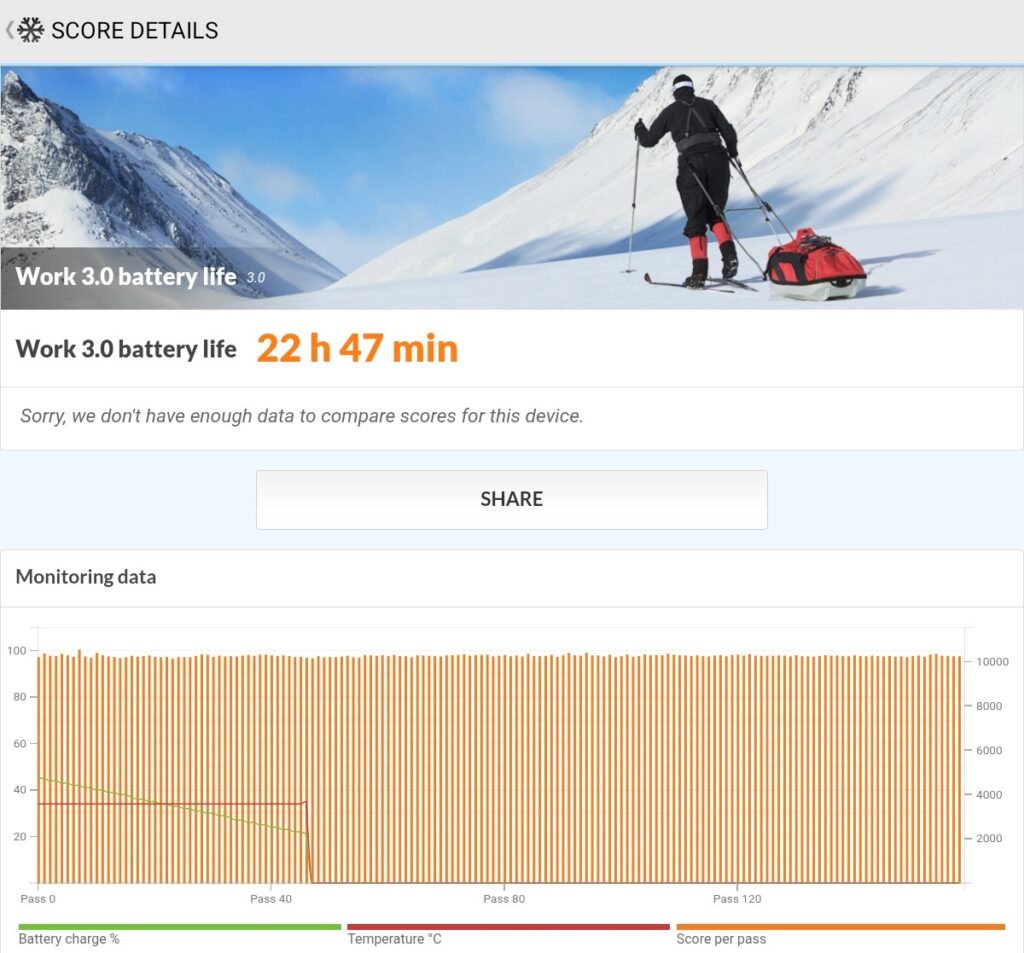
One of the standout features of the TechLife Pad Plus 2 is its 9,000mAh battery. During testing, it lasted 22 hours and 47 minutes in the PCMark Work 3.0 battery test, which simulates a continuous light workload. With support for 18W charging and 5W reverse charging, the tablet is well-suited for extended use.
Key Specifications
- Processor: MediaTek Helio G100, 6nm, octa-core
- Dimensions: 278.8mm x 174.4mm x 7.6mm
- Weight: 590g
- Display: 12-inch IPS TFT, 90Hz refresh rate
- Resolution: 2000 x 1200
- Camera: 8MP rear camera, 5MP front camera
- Battery: 9,000mAh with 18W charging and 5W reverse charging
- Operating System: Android 16
- Colors: Storm Grey, Moonlight Silver, Starlight Pink
- Price: ₱14,999 (4GB + 128GB)
Verdict
The TechLife Pad Plus 2 delivers solid specifications for its price, making it a practical option for students and young professionals looking for an affordable tablet for productivity, entertainment, and everyday use.
However, users who plan to run demanding applications, advanced AI tools, or graphics-intensive games may find its performance limitations noticeable. Prospective buyers should carefully consider their intended use before making a purchase.
Overall, the TechLife Pad Plus 2 offers a balanced mix of features and affordability, particularly for users who prioritize screen size and battery life over raw performance.
Pros
- Excellent value for money
- Long battery life
- Decent performance for everyday tasks
- Large 12-inch display
Cons
- Limited to LTE connectivity
- Chipset struggles with demanding workloads and AI processing
- Occasional lag under heavier workloads
- Storage options may be limiting for some users despite microSD expansion