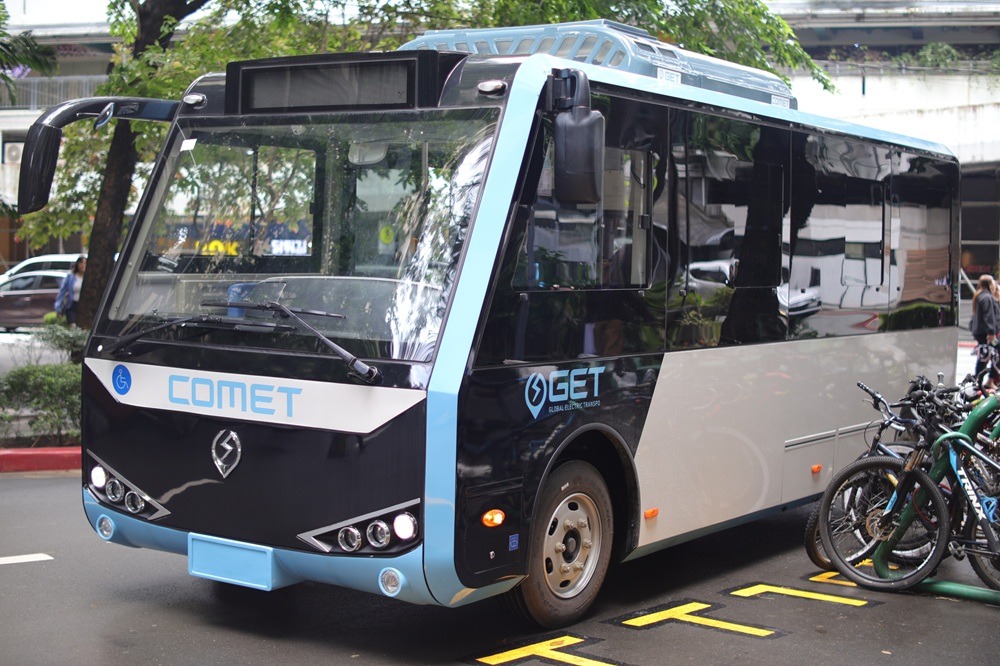
Filipino-founded Global Electric Transport (GET) is expanding its electric minibus fleet and deploying digital tools as part of a broader plan to modernize public transportation in the Philippines.
GET currently operates 110 electric minibuses for private shuttle services and the Metropolitan Manila Development Authority’s Love Bus program.
The company plans to increase its fleet to 300 units by the end of the year, with a larger rollout targeted the following year.
Rather than focusing solely on replacing internal combustion engine vehicles with electric models, GET said its approach covers fleet management, passenger services, safety systems and charging infrastructure.
“At the heart of GET’s modernization goals lies the aim to create a more profitable, reliable, and passenger-centric public transport system,” GET president Sigfrido Tinga said.
The company estimates that electric vehicles can reduce operating costs by as much as 80% compared with vehicles powered by internal combustion engines. It said the savings could allow operators to maintain services without significantly raising passenger fares.
GET is using fleet management systems and passenger-facing applications to monitor vehicles in real time, improve communications and manage operations. Its vehicles are also equipped with onboard CCTV cameras for passenger security and monitoring.
The company said its operating model is intended to provide greater flexibility than conventional fixed-capacity public transport services. It aims to keep routes financially viable even when vehicles are not filled to capacity, reducing the pressure on operators to wait for more passengers before departing.

GET is also exploring adaptive routing, which could use real-time passenger demand and vehicle data to direct commuters to particular vehicles or routes.
Artificial intelligence could eventually support route adjustments and predictive maintenance, although the company did not provide a timetable for deploying these capabilities.
Its longer-term plan includes passenger management systems and a charging network that could be installed in locations such as shopping malls.
GET said it intends to work with existing transport operators instead of displacing them, using their knowledge of local routes and commuter behavior to support the deployment of electric vehicles.
The company also called for more integrated transport planning, noting that commuter routes often cross local government boundaries while transport policies and infrastructure decisions remain fragmented across jurisdictions.
GET said the transition to electric mobility must involve the wider transport system — including operations, routes, passenger services and charging infrastructure — and not simply the replacement of traditional vehicles with electric units.