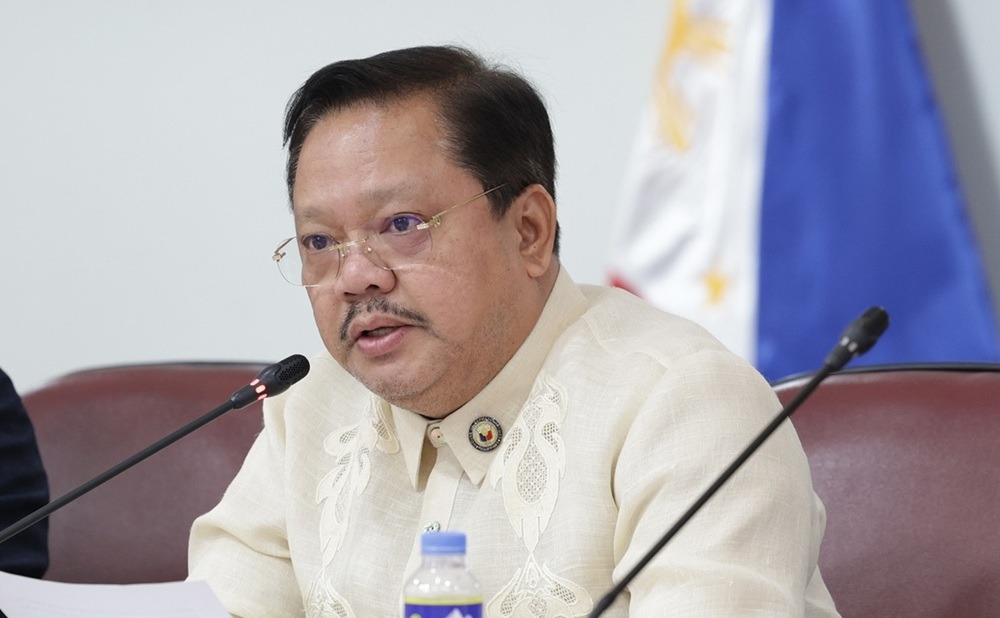
Manila representative Rolando Valeriano has called for increased investment in aerial, surface, and underwater drones, as well as satellite surveillance, to strengthen the Philippines’ maritime security amid continuing tensions in the West Philippine Sea.
Valeriano urged the Senate to prioritize funding for these capabilities as it deliberates on the House-approved 2027 national budget, saying the technologies could help authorities detect maritime intrusions, document hostile actions, protect Filipino fishermen, and monitor critical infrastructure.
The lawmaker also cited the need to monitor undersea communications cables, which are essential to the country’s digital connectivity.
“Given our extensive coastline and maritime zones, the Philippines needs more aerial, surface, and underwater drones, complemented by satellite monitoring,” Valeriano said.
He called on the Philippine Coast Guard (PCG), Armed Forces of the Philippines (AFP), and Bureau of Fisheries and Aquatic Resources (BFAR) to improve intelligence-sharing and operational coordination.
Valeriano said funding for maritime surveillance should include clear performance targets and safeguards against wasteful spending.
“We cannot defend what we cannot see,” he said, adding that stronger surveillance, clear rules of engagement, and credible maritime enforcement are necessary to protect the country’s people and sovereign rights.
Valeriano also urged the PCG, Department of Foreign Affairs, and National Security Council to assess whether Philippine maritime authorities should consider using water cannons under specific circumstances when dealing with aggressive actions at sea.
His proposal follows Taiwan’s recent use of a water cannon against a Chinese fishing vessel. Valeriano noted, however, that Philippine vessels have faced water cannon attacks and dangerous maneuvers by Chinese Coast Guard ships.
In May 2024, Pres. Ferdinand Marcos Jr. ruled out retaliatory water cannon use against Chinese vessels, citing the risk of escalating tensions in the West Philippine Sea.
Valeriano said he respected the President’s position but argued that the government should review its options in response to evolving maritime security challenges.
He stressed that any assessment should consider legal authority, proportionality, operational risks, and diplomatic consequences.
“This is not a call for retaliation,” Valeriano said. “We need clear rules that will allow our personnel to respond effectively while preventing unnecessary confrontation.”
He said the country’s maritime response must be firm and measured, backed by the surveillance capabilities and operational coordination needed to enforce its rights at sea.