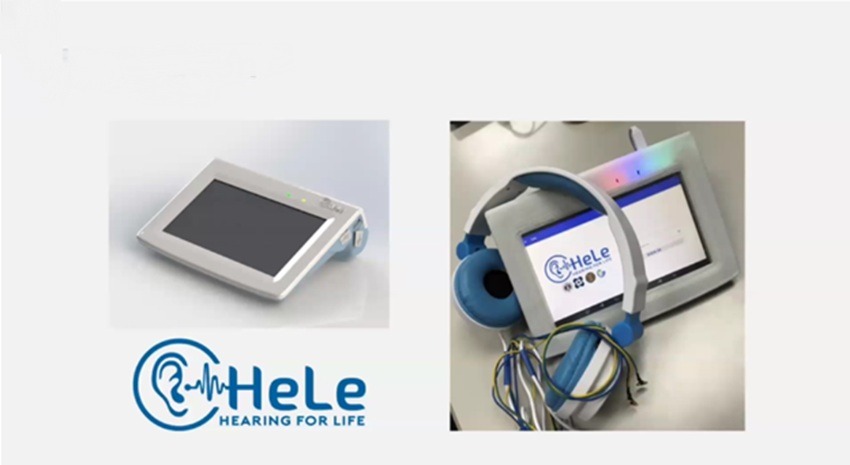
Researchers from the University of the Philippines (UP) Manila and UP Diliman are developing a device that uses machine learning to screen newborns for hearing loss.
The device, called HeLe, is designed for use in hospitals and clinics with limited access to audiologists.
Charlotte M. Chiong, dean of the UP College of Medicine, presented the device during a Lakbay-Agham media tour organized by the Department of Science and Technology and the National Academy of Science and Technology.
HeLe, short for Hearing for Life, plays sounds through headphones while electrodes record the infant’s brainstem responses. A machine learning algorithm analyzes the signals and flags newborns who may need further hearing evaluation. Automating that initial check allows facilities to screen infants without an audiologist on site.
The Newborn Hearing Screening Reference Center (NHSRC) estimates that more than 90 percent of Filipino infants with hearing impairment remain undiagnosed. The center recorded 677,891 newborn screenings across 1,254 accredited facilities in 2025.
Chiong described hearing impairment as a “silent disability” because its signs are difficult to spot in infants. Her team estimated that about 1.4 in every 1,000 Filipino newborns have profound hearing loss in both ears, or about eight babies a day.
Republic Act No. 9709 requires hearing screening before hospital discharge or, for babies born outside hospitals, within the first three months of life.
Chiong advocates screening by one month, confirming suspected hearing loss by three months, and starting intervention by six months.
“Because, as I said, we have to empower the mothers to demand for that service,” Chiong said. “And for the mother to be able to advocate, they need to be educated on what to do.”
The UP team has built two prototypes and is developing another ahead of clinical validation. Chiong identified the Department of Health as a potential adopter. The team is also exploring licensing agreements for manufacturing and distribution.
HeLe takes its name from the Filipino word for lullaby. Researcher Philip B. Fullante said the team hopes the device “will ensure that no baby will grow up not hearing their parents’ loving voices.”