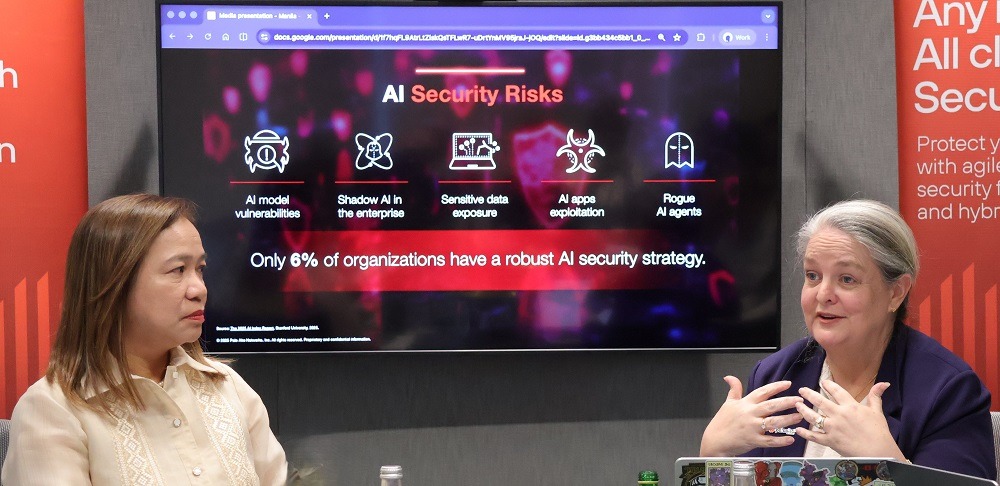
Artificial intelligence (AI) has reached one billion users in just three years, far faster than earlier technologies such as the internet and mobile phones, according to cybersecurity firm Palo Alto Networks, underscoring both its rapid adoption and the growing security risks tied to its use.
The company said the speed of AI adoption is expanding the cyberattack surface, with threats such as ransomware becoming more sophisticated and faster to deploy.
Research cited by the firm showed that the time needed to build and launch ransomware attacks has dropped from nine days to just 15 minutes.
Cybersecurity experts are now pushing for a “secure AI by design” approach, which integrates security measures at the earliest stages of AI development rather than as an afterthought.
Nicole Quinn, vice president for policy and government affairs for Palo Alto Networks Japan and Asia Pacific, said governments and enterprises must work together to address the risks.
“Incorporating security from the start of AI development is crucial,” Quinn said. “This builds trust and ensures that as we transform digitally, our systems remain secure.”
The firm also flagged identity management for AI agents as a key concern, noting that organizations must be able to monitor and control AI-driven actions to prevent misuse or unauthorized access.
It warned that so-called “shadow AI” — the use of AI tools outside official oversight — could expose sensitive data to breaches.
At the same time, advances in quantum computing are raising concerns about the future of encryption. Current cryptographic methods may eventually be rendered vulnerable, prompting calls for early adoption of quantum-resistant security systems.
Palo Alto Networks said closer coordination between governments and the private sector will be critical in developing policies and frameworks that can keep pace with AI’s rapid evolution, particularly in protecting critical infrastructure and sensitive data.