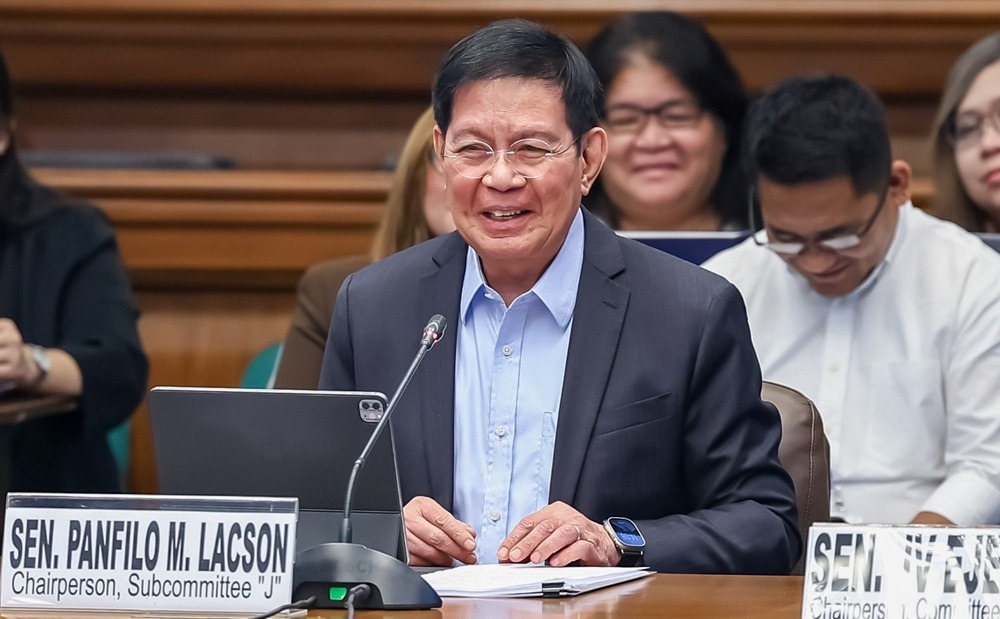
Sen. Panfilo “Ping” Lacson has proposed requiring the National ID, also known as PhilSys ID, as the primary means of verifying the age of Filipinos seeking to open social media accounts, arguing that other methods may create loopholes and enforcement problems.
Lacson raised the proposal during his interpellation of Senate Bill 2424, or the proposed Child Online Safety and Protection Act, sponsored by Sen. Robinhood Padilla.
Under the bill, children below 16 would be prohibited from registering on social media platforms. Those aged 16 to below 18 would be allowed access subject to age-assurance measures and child-safety protocols.
The proposed legislation contemplates several methods of determining a user’s age, including self-declaration, verification through third-party providers and the use of artificial intelligence to estimate age.
Lacson said giving platforms discretion to choose among these methods could weaken enforcement and make the restrictions easier to evade.
“Pag naglatag tayo ng discretion, maglilikha tayo ng butas upang paikutan ang pagpapatupad ng batas na ito,” he said.
He proposed making the Philippine Identification System, or PhilSys, the default verification method while allowing platforms to adopt other mechanisms as secondary options.
“Kung baligtarin natin ang batayan, gawing pangunahing batayan ang National ID at kung gusto ng socmed platforms ibang batayan, nasa kanila. Pero ang pangunahin dapat ang National ID kasi bawat Pilipino at birth meron na. Mas accurate yan at kinikilala ng ating batas,” Lacson said.
Lacson sponsored the measure that became Republic Act 11055, or the PhilSys Act, which established a unified identification system for Filipino citizens and resident aliens.
Citing information from the Philippine Statistics Authority, he said National ID registration had covered about 96 percent of the population.
Lacson also questioned the bill’s plan to allow conditional social media access for users aged 16 and 17. He suggested maintaining restrictions until the age of 18 and using the two years of senior high school to provide structured education on social media use, online risks and digital literacy.
He clarified that the policy could focus on preventing unsupervised access by minors rather than imposing an absolute prohibition.
The senator also proposed giving the Department of Information and Communications Technology a stronger enforcement role, including quasi-judicial authority to determine liability and impose administrative penalties on violators.