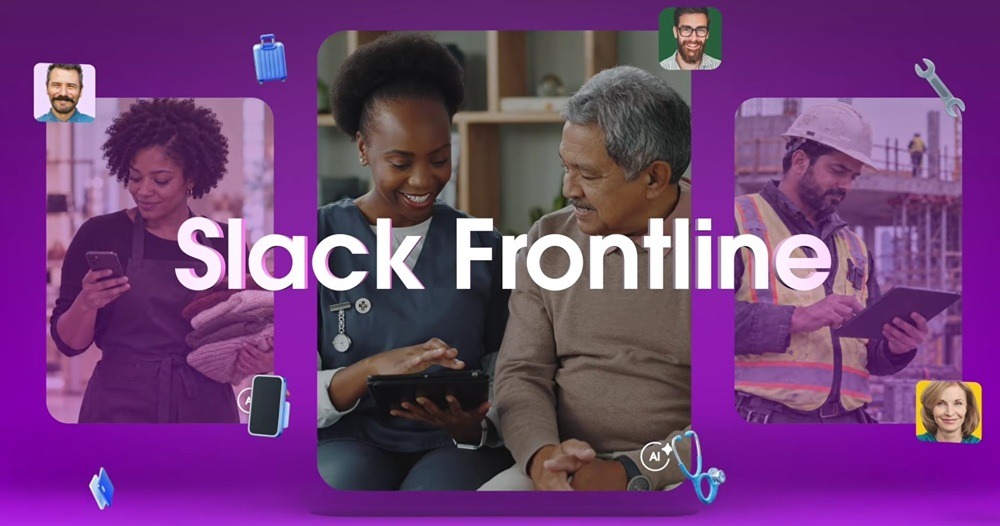
Salesforce has introduced Slack Frontline, a mobile-based workplace collaboration tool designed to connect employees in retail, healthcare, manufacturing, hospitality, and field services with their companies’ internal systems and headquarters.
Available as an add-on to the Slack Enterprise+ plan, Slack Frontline provides workers with access to work-related channels, artificial intelligence (AI) agents, automated workflows, training materials, and company announcements through their mobile devices.
The service is intended for employees who work outside traditional office settings and may not have corporate email accounts or access to desktop computers.
According to Salesforce, the platform supports up to 10 role-specific channels, voice and video conversations through Slack Huddles, and AI agents that can retrieve information and assist with tasks.
The company said the platform can also connect frontline employees to Salesforce data and workflows, allowing them to retrieve authorized information and carry out tasks without returning to a back-office computer.
Slack Frontline includes employee sign-in options through employee IDs, QR codes, or corporate email addresses. It also supports multifactor authentication and administrative controls for applications and AI agents.
Salesforce said the service includes Enterprise+ compliance configurations covering requirements such as the Health Insurance Portability and Accountability Act (HIPAA), Financial Industry Regulatory Authority (FINRA) rules, and data residency.
The platform is designed to replace fragmented communications through personal messaging applications, paper records, and other tools that may lack centralized security and administrative oversight.
AI tools for frontline operations
The service integrates AI agents into workflows across several industries.
Retail employees, for example, can use the platform to access inventory information, customer purchase histories, promotional updates, and store announcements. Teams can also receive stock alerts and coordinate replenishment through shared channels.
In healthcare, caregivers can use AI agents to summarize patient histories and consult specialists through Huddles. Visit information can be recorded in secure channels to help coordinate care between successive caregivers, subject to access permissions and applicable compliance requirements.
Manufacturing and warehouse teams can use channels to report equipment problems, access safety procedures, and notify maintenance personnel. Workflow automation can log maintenance requests and alert on-call technicians, while channel histories provide records for shift handovers.
For hospitality businesses, the platform can route maintenance requests, share guest preferences with relevant departments, and preserve communications between shifts.
Field service teams can coordinate with subcontractors through shared channels, upload site photos, submit reports, and consult headquarters personnel remotely.
Salesforce cited Village Hotels as an example of a business using Slack to coordinate frontline operations. Jon Davis, the hotel group’s chief technology officer, said the company had reduced customer issue resolution time from 48 hours to less than 20 minutes. The company attributed the improvement to its use of Slack.
Enterprise availability
Slack Frontline is available as an add-on for businesses subscribed to Slack Enterprise+. Salesforce said pricing and availability may vary by region and customer agreement.
The launch extends Slack’s collaboration and AI capabilities to employees who work in stores, factories, healthcare facilities, hotels, and remote job sites, rather than primarily serving office-based personnel.