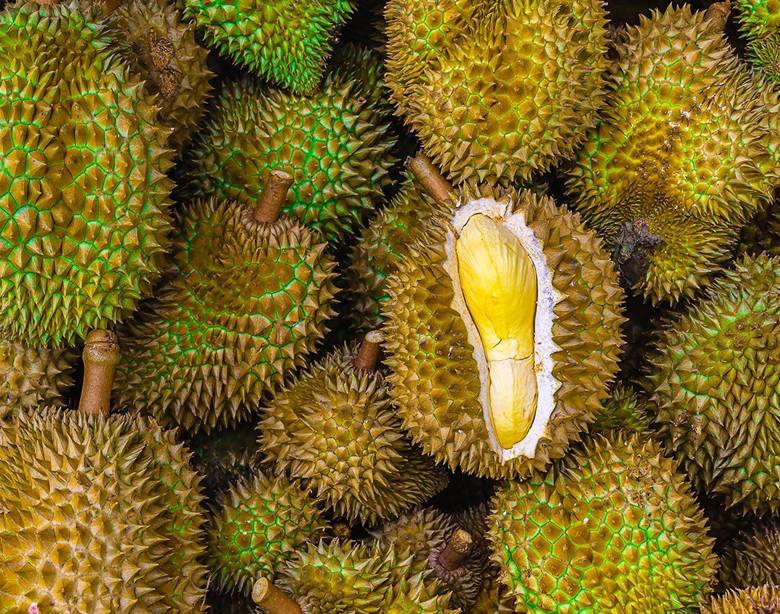
The University of the Philippines Mindanao (UPMin) has developed an artificial intelligence (AI)-based system that assesses durian maturity and quality without damaging the fruit, potentially improving grading consistency and reducing postharvest losses.
Called the AI-based Non-Invasive Grading System for Durian, or AIDurian, the technology combines computer-based visual scanning, acoustic analysis, and deep learning to assess ripeness, surface defects, locule count, and fruit shape.
Durian grading traditionally relies on visual inspection and tapping, methods that depend on the experience and judgment of individual classifiers.
A ripe durian typically has a moist stem, pliable thorns, and distinct bulges. When tapped, it produces a dull, hollow sound that indicates the flesh has separated from the inner shell.
“These methods are subjective and difficult to replicate consistently; grading can vary among classifiers and may become a bottleneck when skilled personnel are limited, particularly during peak handling periods,” said Dr. Armacheska M. Satina, the project leader.
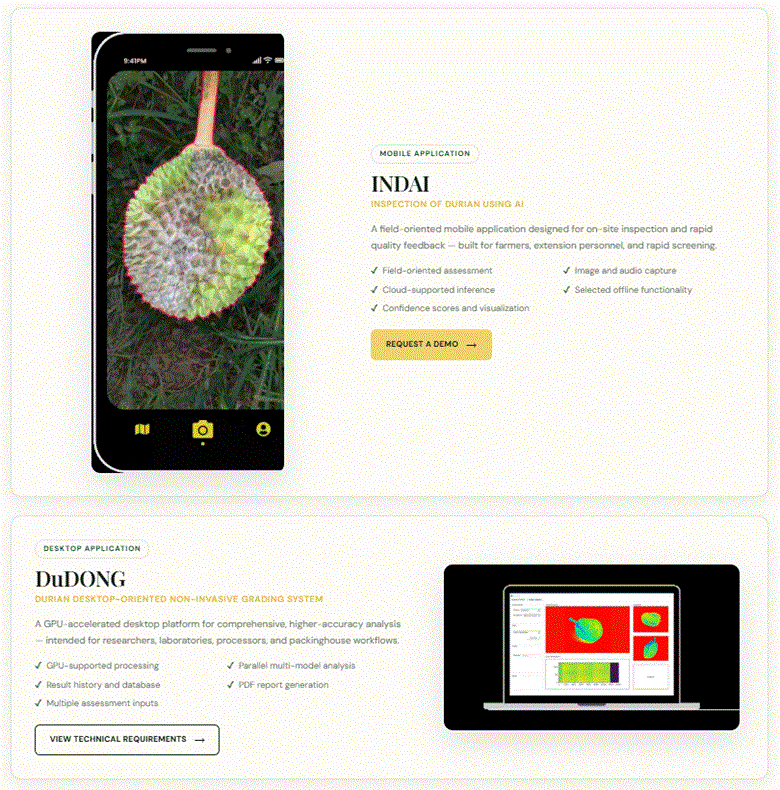
AIDurian is designed to complement or provide an alternative to these manual methods. It has two prototype applications: Inspection of Durian Using AI (INDAI), a mobile application for field inspections and decision support, and Durian Desktop-Oriented Non-Invasive Grading System (DuDONG), a desktop application for more detailed analysis.
According to the project’s reported test results, the system achieved accuracy rates of more than 80% for maturity classification and acoustic ripeness assessment, 93% for defect detection, and nearly 98% for locule analysis.
Incorrect grading can affect the fruit’s taste and ripening quality and prevent products from meeting export standards, potentially resulting in losses for farmers, processors, cooperatives, and other participants in the durian supply chain.
“By automating selected grading tasks, AIDurian can help support more timely sorting, handling, and marketing decisions while potentially reducing postharvest losses,” Satina said.
The Philippines produces at least 80,000 metric tons of fresh durian annually, generating nearly P6 billion in production value, according to the project information. The fruit supplies both domestic and international markets.
The project was implemented by UPMin under the Department of Science and Technology’s (DOST) Collaborative Research and Development to Leverage Philippine Economy (I-Cradle) program, with a budget of P11 million. It was completed in early January 2026.
The DOST-Philippine Council for Agriculture, Aquatic, and Natural Resources Research and Development monitored the project, which also involved durian farm cooperatives and other stakeholders in the Davao Region.
“AIDurian supports the digital transformation of the durian industry, strengthens local capacity in AI applications for agriculture, and provides a potential pathway toward more standardized and sustainable grading practices,” Satina said.