
Buy Now, Pay Later (BNPL) services are becoming increasingly sought after in the Philippines and across Southeast Asia. These services provide short-term financing to everyday consumers, enabling them to buy products up front and pay in installments. The rise of BNPL has changed consumer behavior and impacted retail businesses, so let’s explore these changes in detail.
How Buy Now, Pay Later (BNPL) works
BNPL companies offer short-term financing options for everyday shopping. They lend customers money to pay for goods and services, and the money is repaid in installments.
You may be wondering, what then differentiates BNPL providers from traditional credit card providers? The answer is that BNPL companies offer more flexible terms. Loans have lower interest rates or, in some cases, no interest at all.
BNPL providers earn more revenue from merchant fees and late payment fees than from traditional interest. This model allows them to offer installment payment options with less stringent conditions than credit cards.
Why consumers prefer flexible payment options
BNPL services let customers finance expensive purchases at lower costs. Whether it’s a new washing machine, smartphone, furniture, or even a healthcare bill, customers can tap BNPL loans to pay upfront, then repay the loan over several weeks or months.
Buy Now, Pay Later providers charge significantly lower interest rates than popular credit card providers in the Philippines. It’s usually between 1% to 3%, with steady users having lower rates.
How retailers benefit from credit partnerships
Many retailers have inked partnerships with BNPL providers. These retail credit partnerships are a win-win strategy. BNPL loans give customers more leeway to buy a retailer’s products, and the BNPL provider benefits by building a larger customer base.
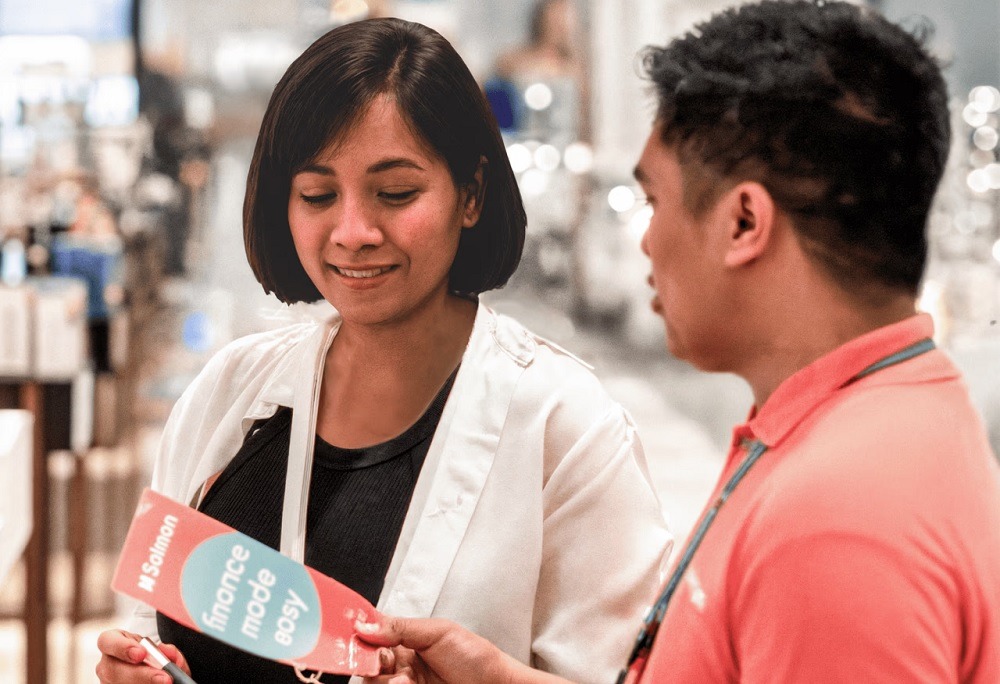
Retailers that integrate BNPL services into their checkout process get larger average order values. Programs like Salmon partner stores Philippines demonstrate how merchant financing solutions help businesses offer flexible installment options while improving the customer experience.
Responsible use of BNPL for consumers
BNPL services offer more flexible terms than traditional credit cards, but responsible use remains important. Ensure you understand the terms before tapping a BNPL loan, including interest rates, late fees, and the repayment period. Late fees can add up, so avoid overextending BNPL loans. Installment payment options should be used for planned purchases, not as an everyday option.
The future of embedded finance in retail
Both online and offline retailers have begun integrating BNPL services at breakneck speed, and the momentum doesn’t look like it’ll slow down soon. The flexibility of BNPL services has led to high consumer demand, and retailers gain a lot from this demand. It’s a win-win arrangement, so BNPL services have continued to grow rapidly. Over time, expect more retailers in the Philippines and Southeast Asia to integrate BNPL services into their checkout processes.
Key considerations
- The BNPL market has grown rapidly, and the momentum will likely continue.
- BNPL should be used for planned or emergency purchases, not like an everyday credit card.
- Understand the fees and repayment terms before tapping a BNPL loan.
- Compare fees and terms from different BNPL providers and choose the most favorable.
Conclusion
BNPL-retailer partnerships improve the experience for all parties involved, including the end customer. Customers get flexible financing, BNPL services get new users, and retailers sell more products. BNPL providers let you finance planned purchases without stress, but remember to use them responsibly.


