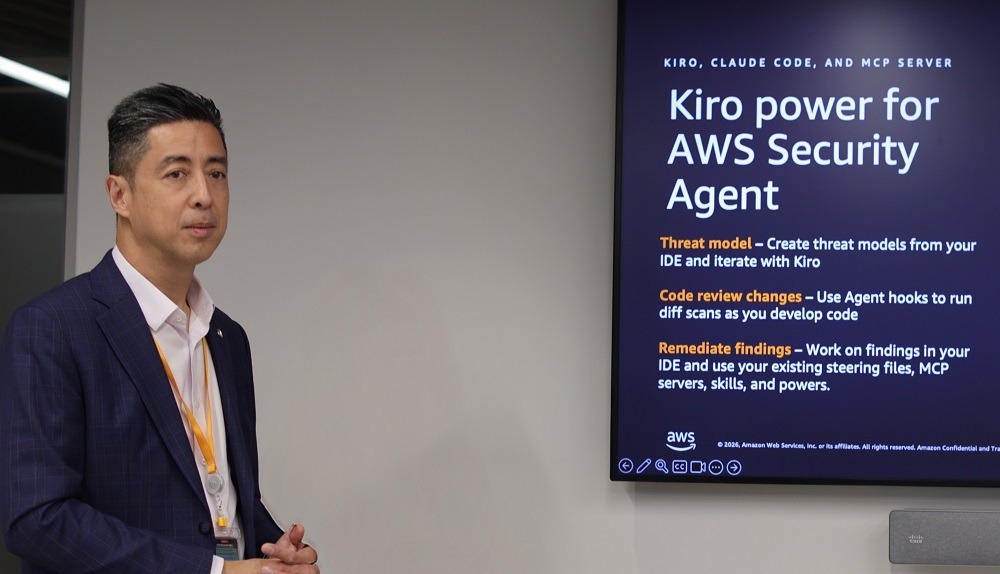
Amazon Web Services (AWS) has introduced Kiro, an artificial intelligence-powered integrated development environment designed to help software teams turn application concepts into production-ready code using structured specifications.
Recently presented in the Philippines, Kiro seeks to address problems such as unclear requirements, undocumented assumptions, outdated documentation, and gaps between software design and implementation.
The IDE follows a spec-driven development approach that combines AI-assisted “vibe coding” with formal requirements, technical designs, and implementation plans.
AWS said the structure gives developers more control over AI agents and helps produce code that more closely follows project requirements.
Kiro uses “specs,” or development artifacts that document how an application should function. These can be used when planning new projects, modifying existing applications, or understanding the behavior of a software system.
Developers can begin with a natural-language prompt, which Kiro converts into user stories, acceptance criteria, and supporting documentation.
After the requirements are defined, the IDE can generate technical design documents containing elements such as data-flow diagrams, TypeScript interfaces, and application programming interface endpoints.
Kiro then creates implementation tasks and subtasks based on the approved requirements and design. These may include unit testing and accessibility checks, while progress can be tracked during development.
The tool also attempts to keep its specifications synchronized with changes to the codebase, addressing the common problem of project documentation becoming outdated as software evolves.
Another feature, called “hooks,” uses event-driven automation to perform predefined actions when files are saved, created, or deleted.
Teams can also configure hooks to update documentation, conduct security scans, and enforce coding standards before code is submitted.
AWS is positioning Kiro as a way for development teams to retain the speed of generative AI coding while imposing more structure on how applications are planned, documented, and built.