
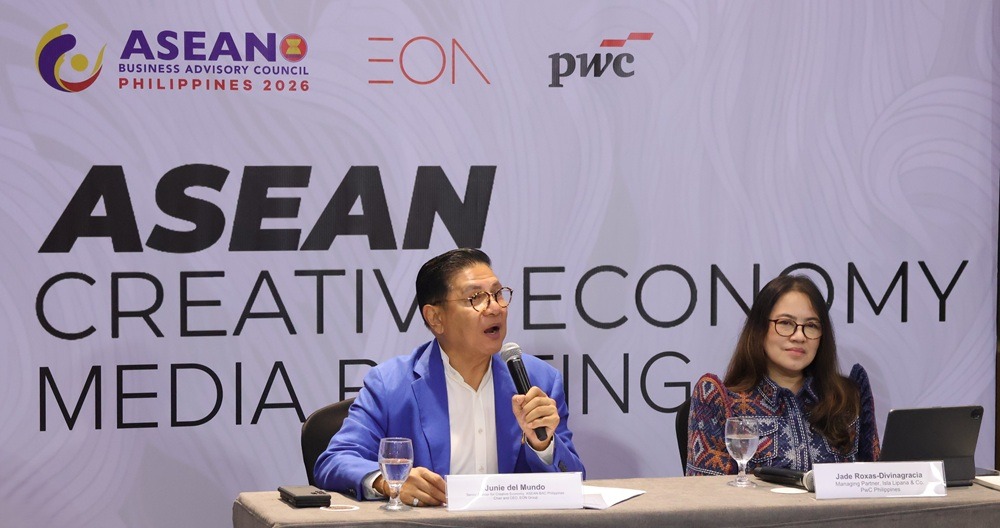
Artificial intelligence (AI) and digital platforms are changing how creative works are produced, distributed, and monetized across Southeast Asia, while raising concerns over intellectual property rights, authenticity, and jobs, according to a study by the Asean Business Advisory Council (Asean-BAC).
The technological shift has emerged as a key issue in the Philippines’ creative economy agenda during its 2026 Asean chairship, as the regional bloc seeks to develop creative output into commercially viable intellectual property, exports, and investments.
The Asean Creative Economy Initiative study said streaming services, social media, online marketplaces, app ecosystems, and other digital distribution channels have expanded the reach of creative works and the economic role of software, digital content, media, and design.
Global exports of creative services reached $1.7 trillion in 2024, more than double the $709 billion generated by creative goods exports, according to figures cited in the study.
AI is also beginning to influence content development, production, and distribution. Its potential applications include generating ideas, adapting content for different markets, automating parts of production, reducing costs, and personalizing consumer experiences.
The technology, however, has intensified questions over copyright and ownership, particularly when AI models are trained using existing creative works. Other concerns include the disclosure of AI-generated or AI-assisted content, the authenticity of creative output, and the possible displacement of workers.
These issues have increased pressure on governments to establish regulatory and governance frameworks that protect creators without limiting technological adoption.
Digital readiness is also becoming a factor in whether creative businesses can expand beyond domestic markets. Online platforms allow films, games, music, designs, and other intellectual property to reach regional and global audiences, while connecting creators with financing, production partners, distributors, and customers.
For the Philippines, the stakes are significant. The creative economy generated P2.12 trillion in 2025, accounting for 7.6 percent of gross domestic product.
The sector employed 8.71 million people, or 17.8 percent of the country’s workforce, while exports of creative goods and services reached about P747 billion.
The Asean-BAC Philippines study nevertheless identified uneven digital and AI readiness as a major constraint on the region’s creative industries. It also cited gaps in financing, intellectual property commercialization, market access, and industry data.
The emerging regional agenda calls for the wider but regulated use of technology to improve the production, distribution, and monetization of creative works, alongside stronger intellectual property protection, financing, skills development, and access to overseas markets.


