As agentic AI technology continues to evolve, businesses across Southeast Asia are keenly exploring its applications to enhance their operational processes.
The IBM Institute for Business Value’s CEO Study 2025 revealed how agentic AI is starting to reshape business practices by augmenting productivity, improving operational efficiency, and significantly cutting costs.
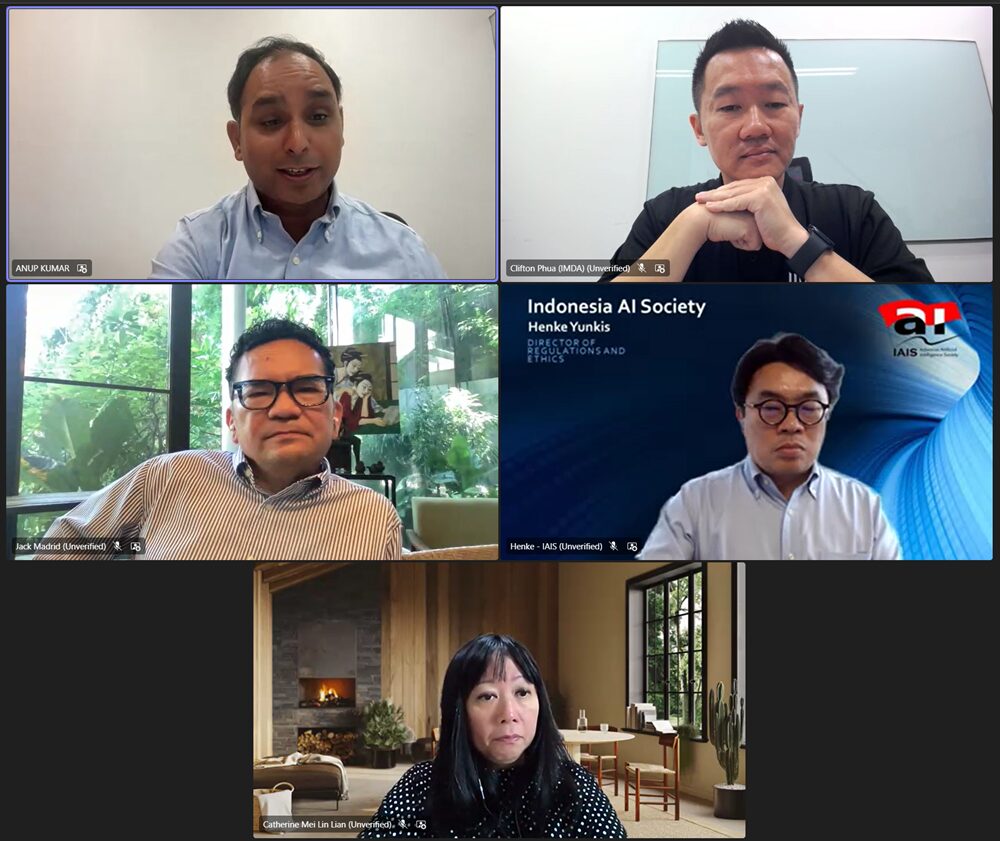
During a media roundtable held on June 24, industry experts gathered to discuss the findings of the CEO Study 2025, highlighting observed trends and directions within the industry.
The discussions underscored not only the strategic edge of adopting agentic AI but also the pressing need for proactive leadership to embrace these innovations to remain competitive in the era of intelligent automation.
As one of the primary adoption areas, the finance sector is leveraging agentic AI to enhance predictive financial planning and transactional execution, integrating features such as auto-data validation and real-time risk monitoring.
The human resources departments are utilizing these advanced capabilities to anticipate workforce skill requirements and automate recruitment processes, leading to more personalized employee experiences.
The procurement sectors are applying dynamic sourcing strategies that adapt based on market conditions, while sales support and customer service operations are using agentic AI for lead prioritization and offering 24/7 multilingual assistance to clients.
Agentic AI is rapidly expanding at the global scale. The 2025 CEO Study indicated that majority of CEOs expect AI investments to surge more than double in the next two years. The study also documented that 61% of CEOs are actively adopting AI agents and preparing for large-scale implementation.
By 2027, 85% of the surveyed executives and executives anticipate seeing a favorable return on their investments in AI efficiency and savings.
In the Asean region, the adoption of AI agents is also pronounced, with 57% of respondents indicating active use. Furthermore, 71% are prioritizing AI use cases based on return on investment (ROI).
Country-specific surveys show that CEOs from Indonesia, Malaysia, the Philippines, and Singapore view agentic AI as a significant competitive advantage.
However, challenges to innovation remain with respondents citing lack of expertise, risk aversion, and inadequate technology as barriers.
Approximately half of the Asean respondents reported having disconnected technology components within their organizations due to the slow pace of investments in technology adoption.
To address these challenges, IBM has revamped its AI Incubation Campaign to incorporate agentic AI. The two-day bootcamp is designed to assist IBM enterprise clients in adopting the technology and learning its effective utilization.
In support of these efforts, IBM has developed the “IBM Watsonx Orchestrate” platform, which utilizes foundation models within an agentic architecture to provide advanced reasoning capabilities and autonomous decision-making.
Additionally, the company offers various enterprise agentic AI tools, including “llm-d Community,” “Docling,” “Langflow Platform,” and “MCP Gateway,” which are all production-ready innovations tailored to meet business needs.
IBM also has additional enterprise agentic AI tool, including “llm-d Community,” “Docling,” “Langflow Platform,” and “MCP Gateway” which are production-ready innovations that could fit business use-cases as needed.
Catherine Lian, general manager of IBM Asean, states that: “We stand at a pivotal moment, where AI Assistants and Agents are evolving from tools and technologies into true partners that enhance human creativity and reshape enterprise operations as we know them.”