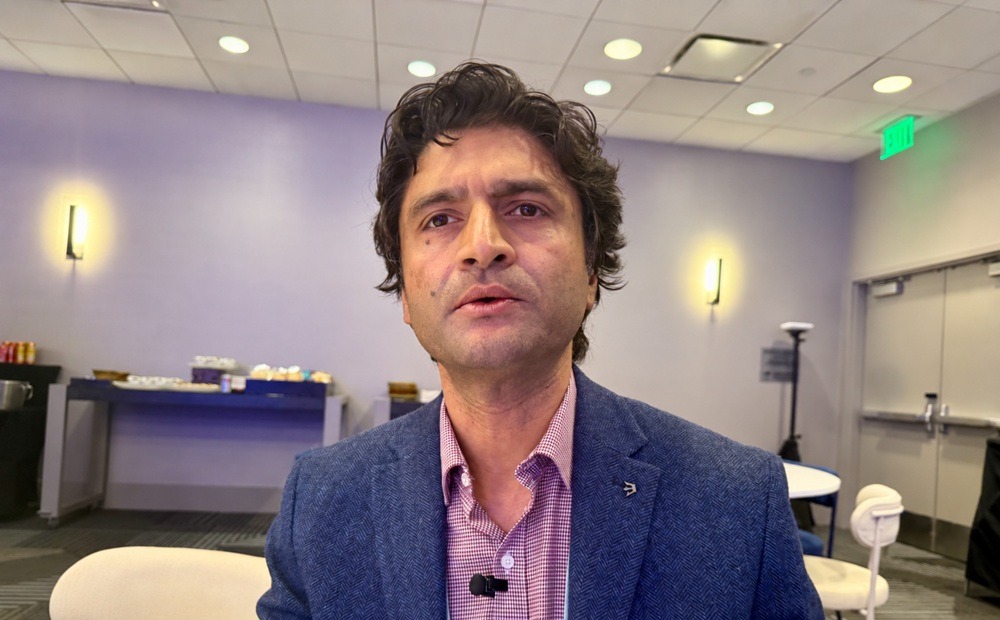
SAN FRANCISCO — Enterprise technology firm Appistoki plans to expand further in the Philippines, which now generates 70% of its revenue in Southeast Asia, as local companies explore the use of agentic artificial intelligence (AI).
Appistoki founder and CEO Abhijeet Kulkarni said the company would pursue more Philippine clients, develop localized applications, and target the midmarket segment over the next two to three years.
“Our strategy is probably to go deeper in the Philippines, grow more business, more localized innovation,” Kulkarni said in an interview on the sidelines of Dreamforce 2026.
“We’ll continue to build localized innovation for the Philippines, get more logos, and it’s going to be easier for us because when you have top logos in the Philippines already in your portfolio, it becomes easier for you to acquire more logos,” he added.
Appistoki, a Salesforce consulting firm acquired by Philippine technology company Novare Technologies more than a year ago, operates in markets including the Philippines and Singapore.
Kulkarni said the Philippines remained the company’s largest market in the region.
“Seventy percent of our energy is focused on the Philippines, even today,” he said. “Seventy percent of Appistoki’s revenue comes from the Philippines.”
He cited English proficiency, relatively low market-entry barriers, and local executives’ willingness to treat technology vendors as partners as factors supporting the company’s growth.
“In terms of sophistication, in Asean, the Philippines is right up there,” Kulkarni said. “The CXO-level folks that we talk to, they have the exposure, they have the strategy, and a lot of respect for vendors.”
As an example of localization, Kulkarni said Appistoki was among the first Salesforce partners to integrate the platform with Viber, a messaging application widely used in the Philippines.
The acquisition by Novare has given Appistoki access to a larger client base, local personnel, and capabilities beyond Salesforce, including more than 200 data engineers, he said.
Kulkarni declined to disclose revenue and customer-growth figures following the acquisition but said Appistoki was now working with larger banks and property companies that would have been more difficult to secure independently.
“There are bigger logos and larger logos that we wouldn’t have been able to take on just as Appistoki,” he said. “We need people on the ground. We need skill sets outside of Salesforce. And all of that is possible with Novare as a channel partner.”
The companies recently opened an AI Center of Excellence in Bonifacio Global City to allow customers and prospective clients to test Salesforce AI applications adapted for specific industries.
The facility initially features applications for the property sector, with financial services and possibly hospitality expected to follow.
Three companies had booked sessions at the facility shortly after its inauguration. Kulkarni said Appistoki was targeting at least 150 appointments over the following year as it adds more industry-specific applications.
“The whole idea of the COE, I think it was Salesforce’s Asean vision, is that let’s have a place where the customers can actually touch and feel and experience it,” he said.
Kulkarni said the facility could help companies move beyond AI demonstrations by allowing their executives and employees to assess applications before incorporating them into their technology plans.
“What the COE gives Appistoki, Novare, and the Philippines market is a place to come and experience all the slew of AI innovations that Salesforce has done. But we’ve localized them for a particular industry,” he said.
Despite growing interest, Philippine companies still face obstacles to deploying agentic AI at scale, particularly poor data quality and uncertainty over consumption-based pricing, according to Kulkarni.
Unlike traditional enterprise software licenses that charge a fixed amount per user per month, agentic AI services may charge based on actual usage or token consumption. This can make technology spending less predictable for companies accustomed to fixed annual budgets.
“Their concerns are that they may end up spending more than what they’ve planned,” Kulkarni said. “Because it’s token consumption. It is like a phone bill. So you have no idea of what you are going to spend.”
He said companies would also need to invest in integrating, harmonizing, and cleaning data before AI agents could deliver reliable results.
“It starts with the data,” Kulkarni said. “There is a huge amount of investment, strategic planning that needs to be done to get the data right, to get the integrations right, to make sure that all your data sources are harmonized, normalized.”
Financial services and retail are among the industries likely to benefit from agentic AI, he said. Retailers could deploy additional AI agents during periods of high demand, while banks could use voice-based agents to provide services outside normal operating hours.
Kulkarni rejected the view that the technology would necessarily reduce headcount, saying it could free workers from repetitive operational work and create demand for AI-related services.
“I don’t think it will impact employees and headcount. I think it will really bring in efficiencies,” he said. “Today they are straddled with really low-level operational tasks. So they will have the latitude to upskill themselves.”
He pointed to the emerging role of forward-deployed engineers, who work closely with customers to adapt AI systems to specific operational requirements.
“There is going to be a surge in AI services. Those jobs didn’t exist in the past,” he said. “When you are adopting an AI platform, it is going to need services. So you’re going to see new jobs created.”
Kulkarni cautioned companies against copying AI projects implemented by other organizations without considering their own structures, employees, and business objectives.
“A lot of hype is because you’re implementing someone else’s dream,” he said. “Because you’ve heard another company talk about it and say, ‘Hey, I want that as well,’ without thinking through the structure of your organization, the demand of your employees, then that is hype.”
An effective AI strategy, he said, should begin with specific operational problems and produce measurable improvements for front-line workers.
“Your AI strategy has to impress, say, a call center agent who is facing the customer every day,” Kulkarni said. “It has to touch him or her and add value to his day-to-day activities.”