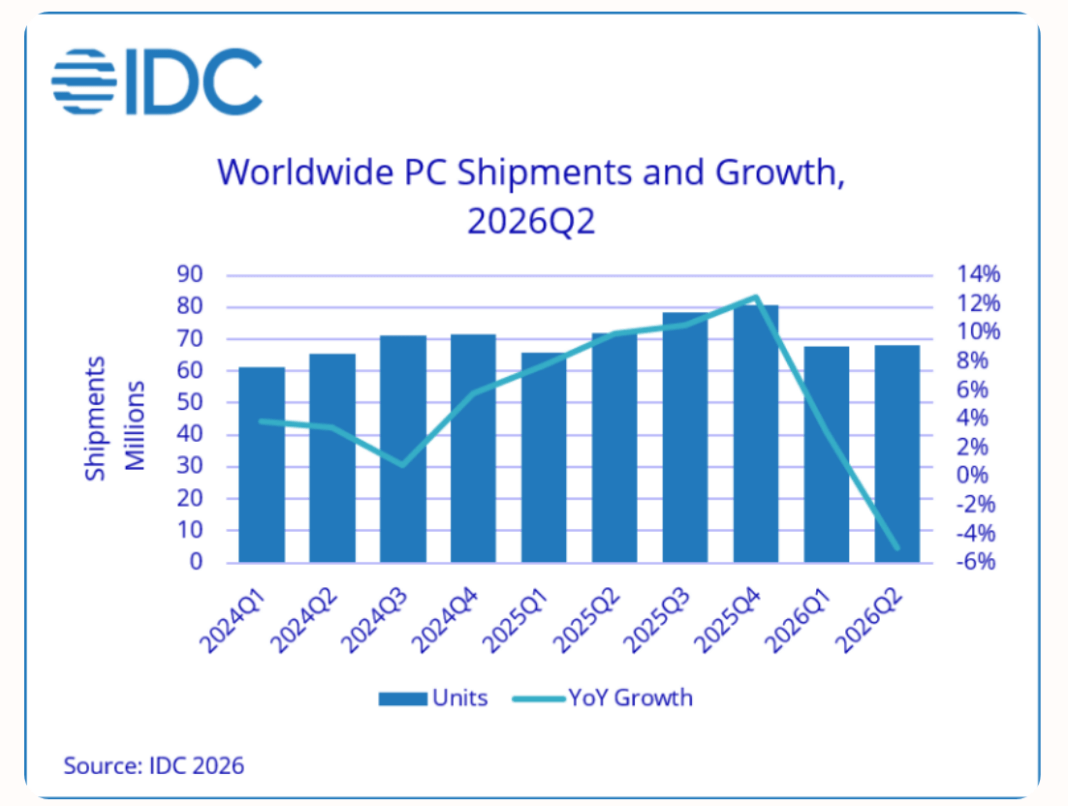
Worldwide PC shipments declined 4.9% year on year in the second quarter of 2026 to 68.2 million units, marking the market’s first contraction after nine straight quarters of growth, according to research firm IDC.
IDC attributed the decline largely to a continuing shortage of memory chips, which had earlier prompted vendors to bring forward inventory purchases as much as possible.
The analyst firm said supply constraints in other components such as storage, along with geopolitical pressures, also weighed on the market.
“The real story here is the disconnect between units and dollars: shipments are falling, but revenue is climbing because vendors are pushing through price increases faster than demand is dropping,” said Jitesh Ubrani, research director for consumer devices at IDC.
“Given worsening macro conditions and a memory shortage that isn’t expected to ease until early 2028, we don’t expect another round of inventory pull-forward, which points to a sharp slowdown in growth rates in the second half of 2026. Vendors are bracing for further price hikes into 2027, and channels are already flagging concern about elevated inventory at these higher price points,” he added.
IDC said the memory shortage could also dampen the broader PC upgrade cycle, even as demand grows for devices capable of on-device AI processing.
Rising cloud computing costs have helped drive interest in AI-capable PCs, but higher component prices may limit how quickly that demand translates into shipments.
The market researcher also pointed to further consolidation in the PC industry, with larger brands better positioned to secure scarce memory supply.
“As market conditions continue to worsen, the importance of supply chain management and capabilities are increasingly important. The largest vendors, with their buying power and long-standing supplier ties, are best positioned to take share from smaller rivals,” said Jean Philippe Bouchard, vice president for consumer devices at IDC.
Bouchard said Apple was among the vendors that gained share during the quarter, helped by the launch of its MacBook Neo.
He noted that while Apple also raised prices in line with the rest of the market, it remained in a relatively stronger position than rivals facing the same supply pressures.