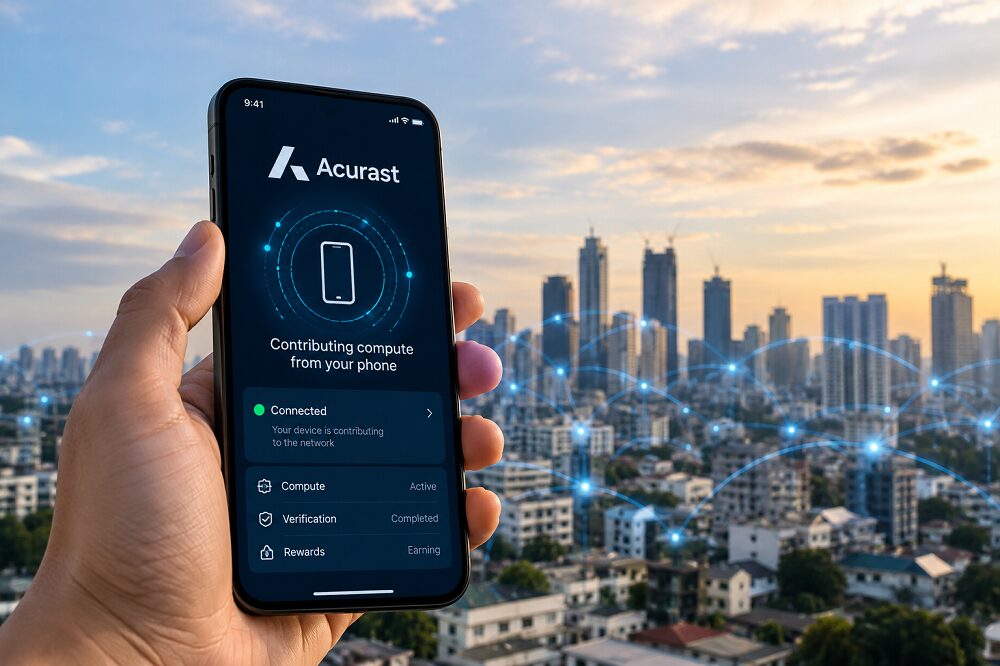
Acurast, a decentralized computing network that uses smartphones to process digital workloads, is positioning its technology as an alternative to traditional data centers as the Philippines plans to expand its artificial intelligence infrastructure.
Under the Philippines AI+ Infrastructure Masterplan 2026–2033, the government aims to increase AI data-center capacity from 50 megawatts to 1.5 gigawatts by 2033.
Acurast said its network allows compatible smartphones to contribute computing resources to applications and workloads without relying on centralized cloud infrastructure.
The company reported that it had onboarded nearly 340,000 phones across more than 175 countries following its token generation event and mainnet launch in January 2026. It aims to expand the network to more than two million devices.
Users can join through Acurast’s Processor Lite app for Android and iOS, which allows phones to contribute computing resources when the app is opened. Users can also install Acurast Core to dedicate their devices to the network around the clock, according to the company.
Participating phones undergo cryptographic verification to establish that they are genuine devices eligible to join the network.
Acurast said developers are using or exploring the network for blockchain data feeds, cross-chain operations, AI inference, and web scraping. It also supports confidential computing and zero-knowledge proof generation and verification.
The model distributes computing workloads across participating smartphones rather than concentrating them in centralized facilities.
For developers and businesses, this could provide another option for running applications and reduce dependence on individual cloud providers.
Acurast also cited hardware-backed Trusted Execution Environments (TEEs), along with attestation and verification mechanisms, as safeguards for sensitive computations.
The approach, however, does not eliminate the Philippines’ need for conventional data centers. The country’s AI infrastructure expansion will also depend on reliable electricity, connectivity, skilled workers, and access to computing resources.
Acurast said alternative computing models could complement purpose-built facilities by allowing compatible smartphones to contribute to the supply of computing resources.
The company describes its network as a decentralized computing platform designed to let developers run applications without relying on data centers.